

AHIF Students Gain Firsthand Insight into Greece’s Defense Capabilities and Strategic Contributions
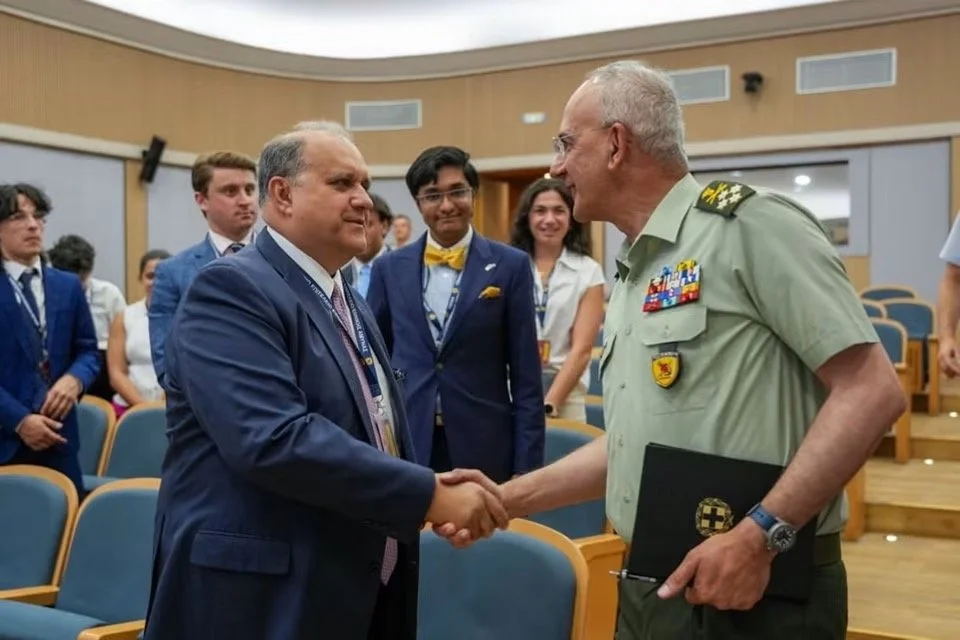
Nick Larigakis shakes hands with Gen. Dimitrios Choupis, Chief of the Hellenic National Defense General Staff (HNDGS) during our visit to the Greek Pentagon.
No. 58
ATHENS — College students participating in the American Hellenic Institute Foundation’s (AHIF) 2026 College Student Foreign Policy Trip visited military installations across Greece for a firsthand examination of the country’s defense capabilities and strategic contributions.
During visits to Souda Bay, Salamis Naval Base, the Greek Pentagon, a Military Academy training center, and the Hellenic Tactical Air Force Command Headquarters, students received briefings from senior military leaders and observed Greece’s air, land and maritime capabilities.
“Greece’s strategic importance extends beyond its geography,” AHI President Nick Larigakis said. “Through briefings with military leaders and visits to key installations, the students gained a firsthand understanding of Greece’s defense capabilities and its critical contributions to U.S., NATO and regional security.”
Examining Allied Defense Capabilities at Souda Bay
On July 3, the students traveled to Souda Bay, Crete, one of the Eastern Mediterranean’s most strategically important defense hubs.
The program began at the NATO Missile Firing Installation (NAMFI), where Maj. Gen. Nikolaos Dimitrakos welcomed the delegation and provided an overview of the installation’s mission and capabilities.
Students learned how NAMFI provides a multinational environment in which NATO allies and partners conduct missile firing exercises and enhance their air defense readiness. The visit highlighted Greece’s contributions to collective defense and the importance of training facilities that allow allied forces to strengthen interoperability.
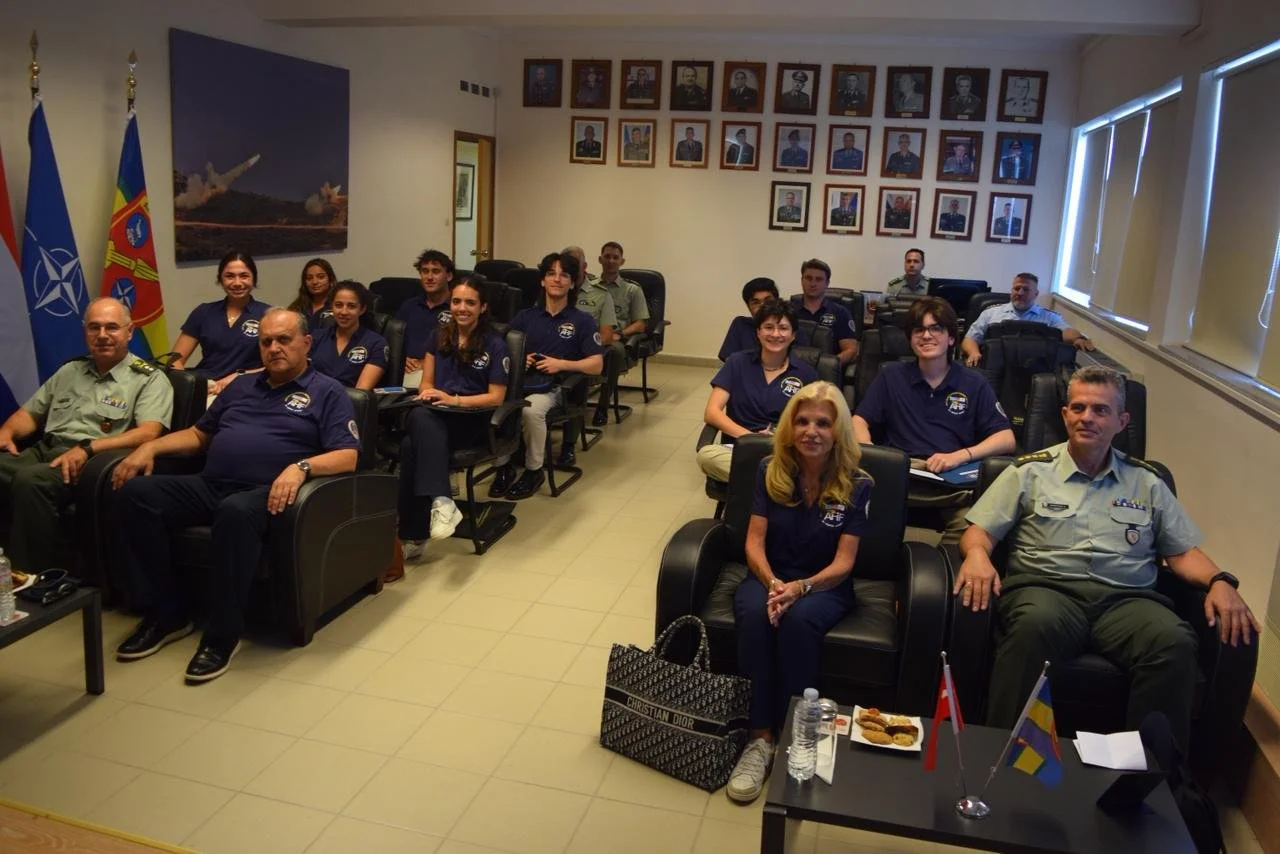
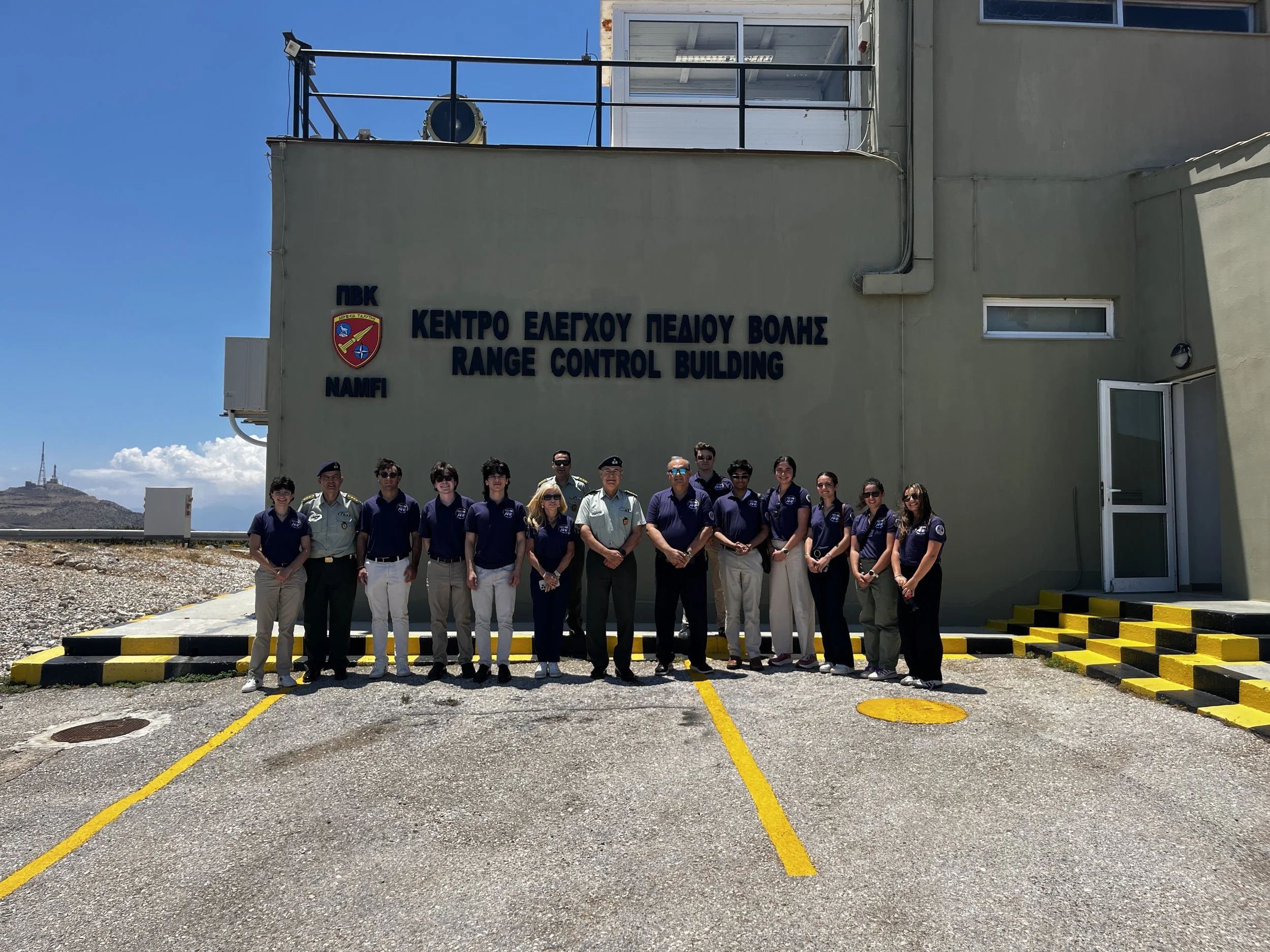
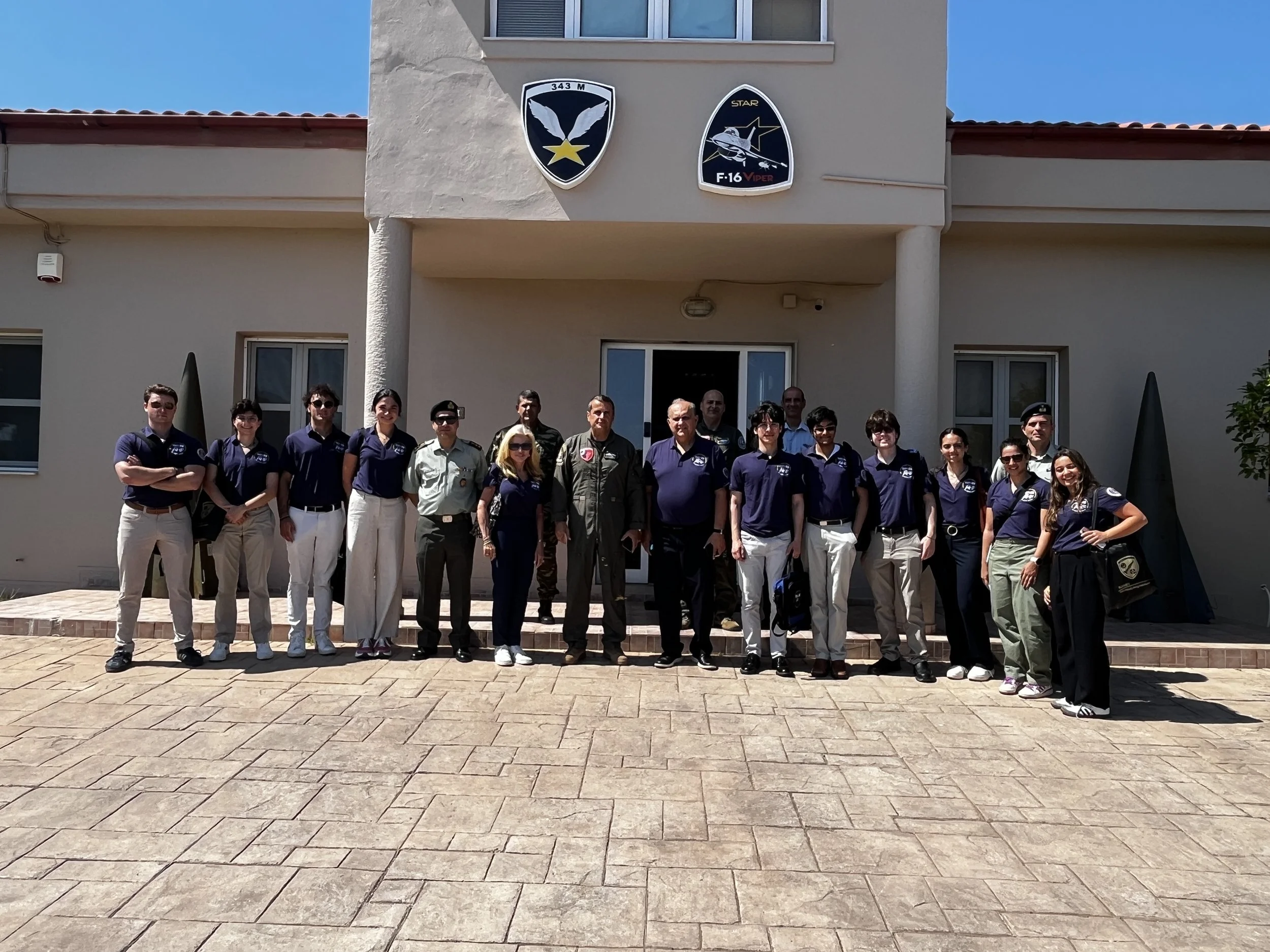
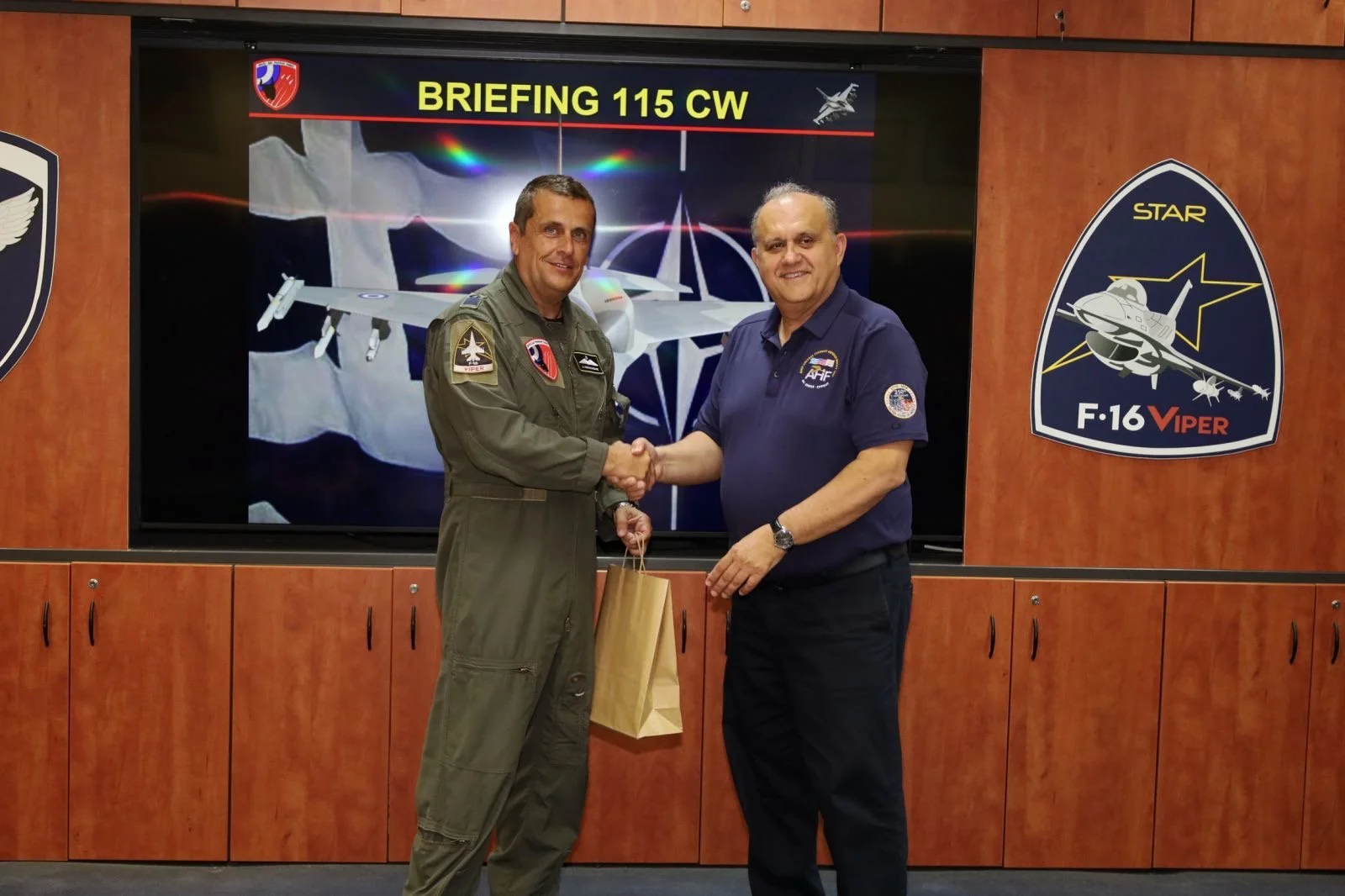
The delegation then traveled to the Hellenic Air Force’s 115 Combat Wing, where Brig. Gen. Athanasios Papamanolis welcomed the students. A briefing and installation visit offered insight into the Combat Wing’s mission and its role in supporting Greek, U.S. and allied operations. The delegation also witnessed an F-16 Viper demonstration, showcasing the squadron's operational capabilities.
The students later joined unit commanders who hosted a luncheon at NAMFI’s Asteria Officers Club.
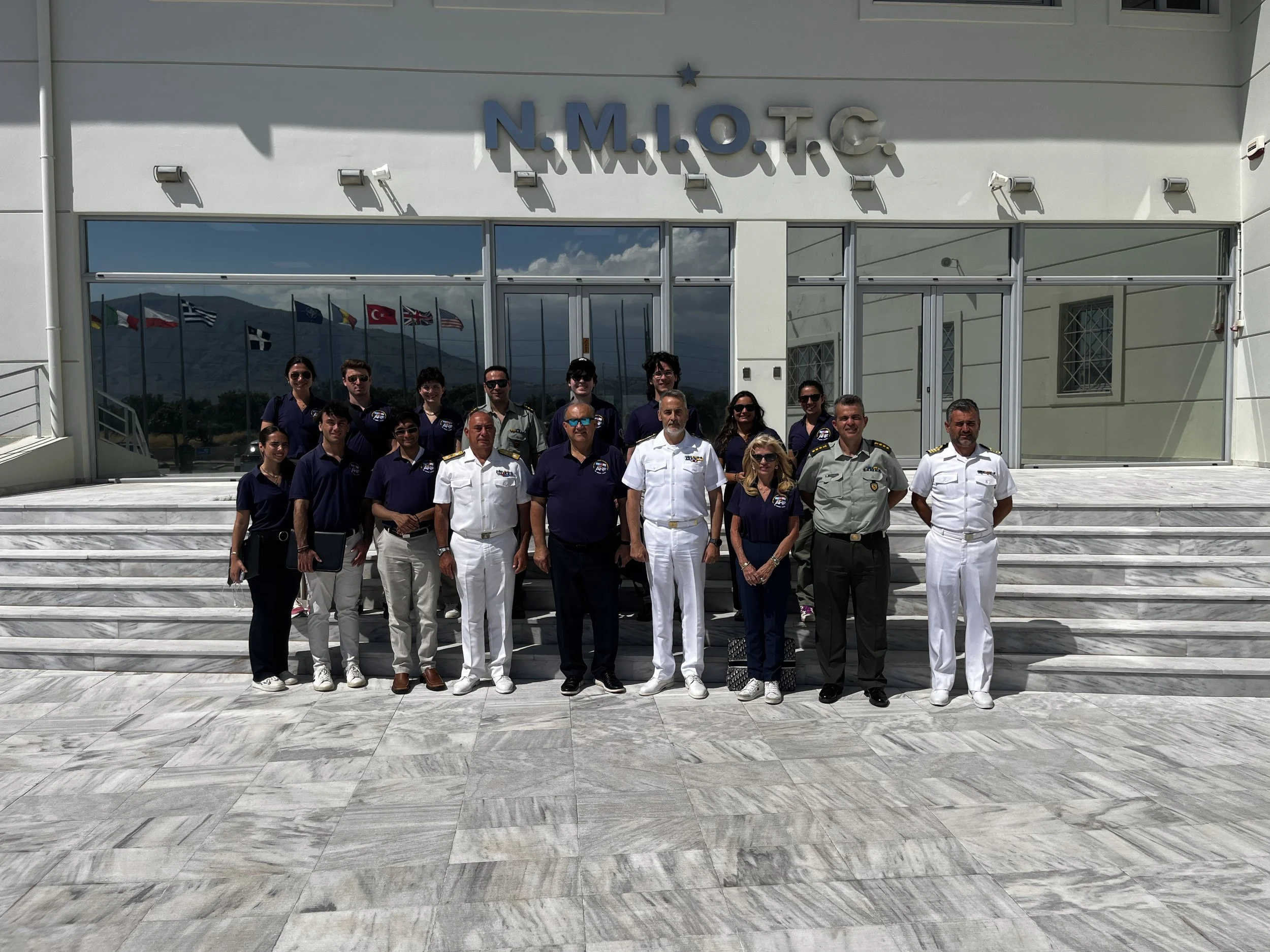
The delegation continued to the NATO Maritime Interdiction Operational Training Center (NMIOTC), where Commodore Pavlos Aggelopoulos welcomed the students and provided a briefing on the center’s mission.
NMIOTC provides education and training that help NATO allies and partners develop the skills needed to conduct maritime interdiction operations. Greece’s extensive maritime experience and Souda Bay’s strategic location make NMIOTC an important resource for NATO and partner nations operating in the Eastern Mediterranean and surrounding regions.
The students also received a welcome and briefing from Commodore Athanasios Douros, commander of Souda Naval Base. The engagement provided further perspective on Greece’s naval capabilities and the base’s role in supporting national and allied defense objectives.
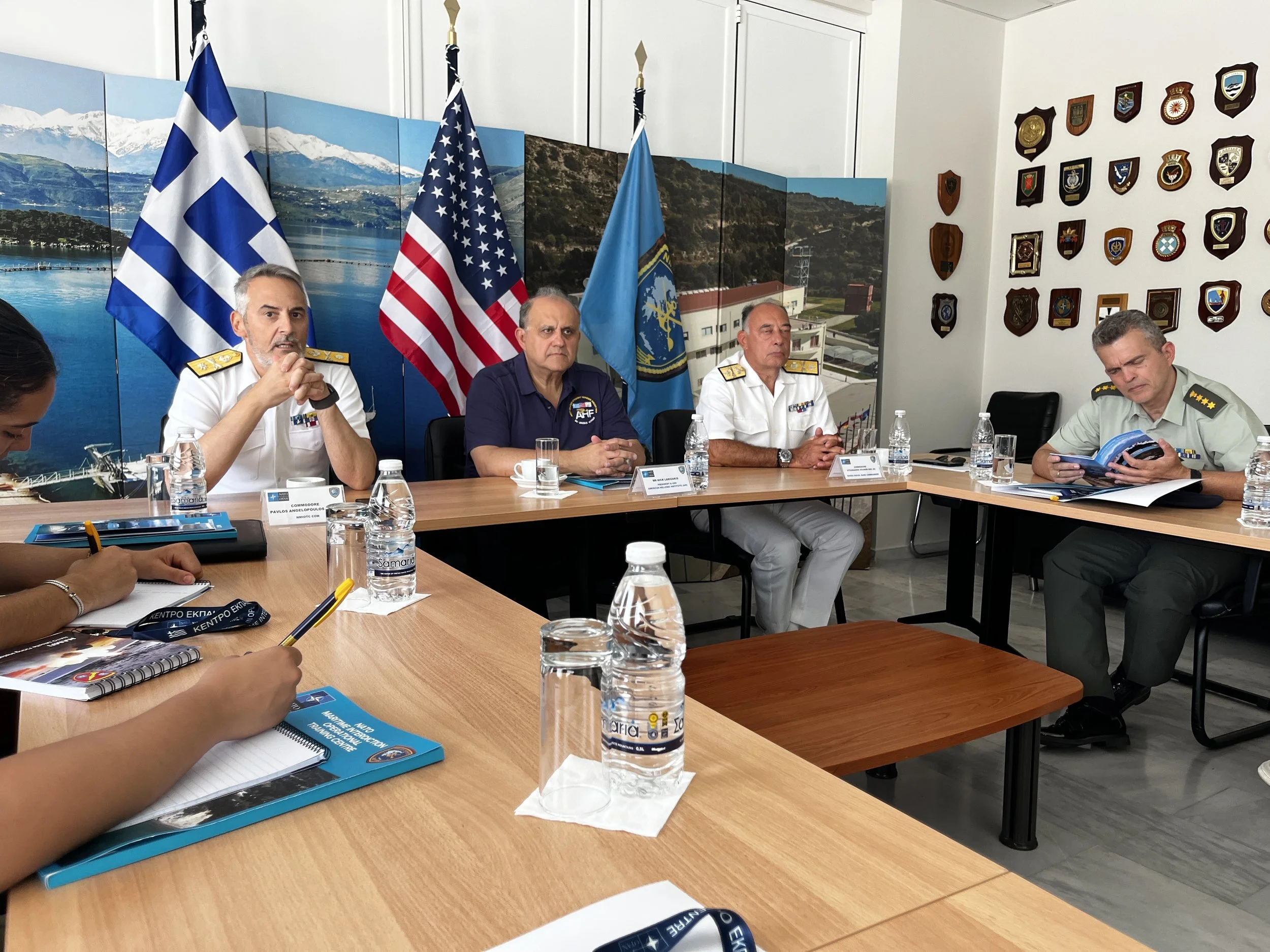
“After participating in the AHIF College Student Foreign Policy Trip this year … I witnessed exactly how Souda Bay supports and advances U.S. interests in the region,” Antigoni “Anna” Papakirk, a senior at Yale University, said.
Exploring Greece’s Naval Capabilities
On July 6, the delegation traveled to Salamis Naval Base and the Hellenic Fleet Command, where Vice Adm. Christos Sasiakos, commander in chief of the Hellenic Fleet, welcomed the students for a briefing and discussion.
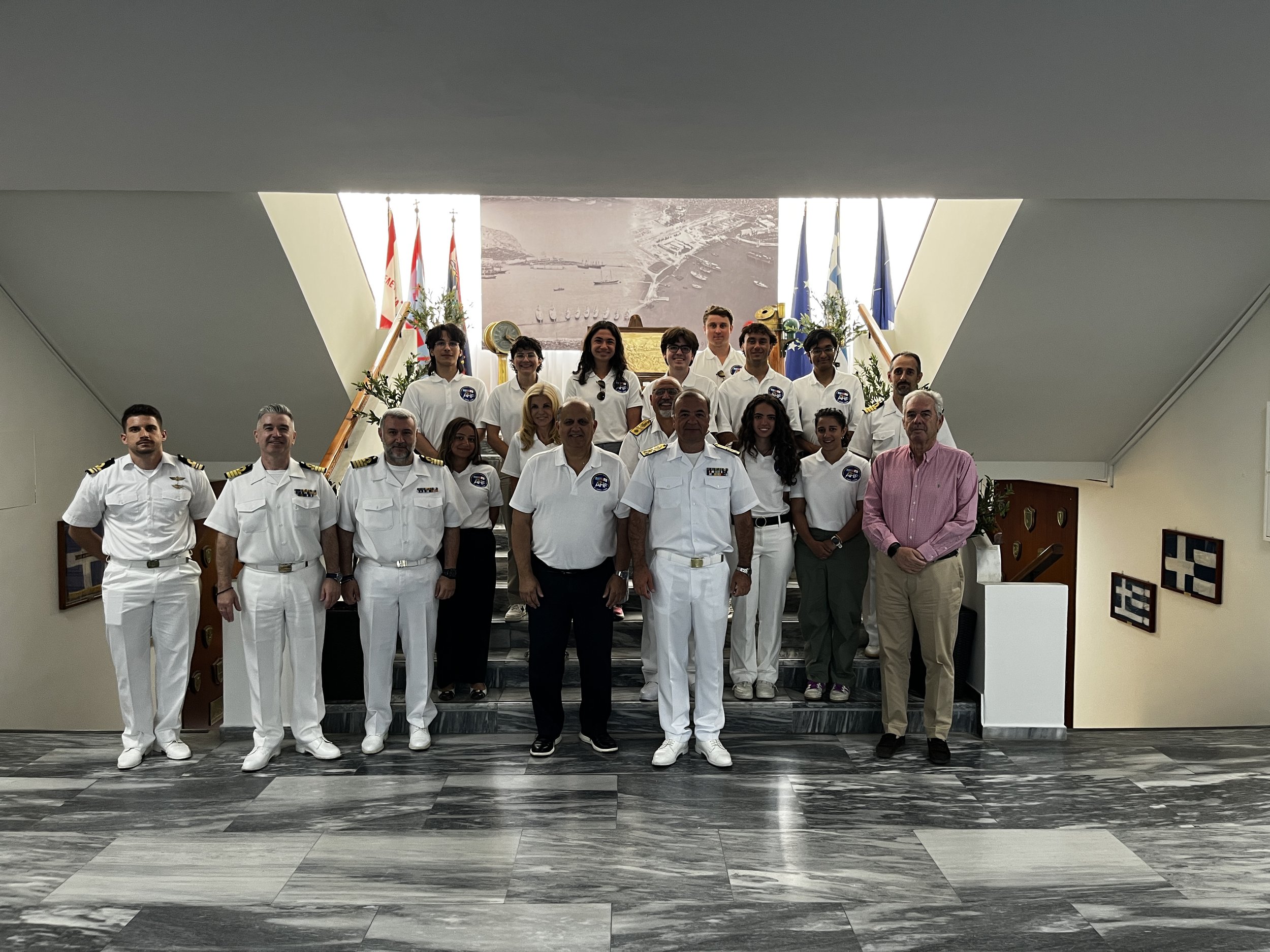
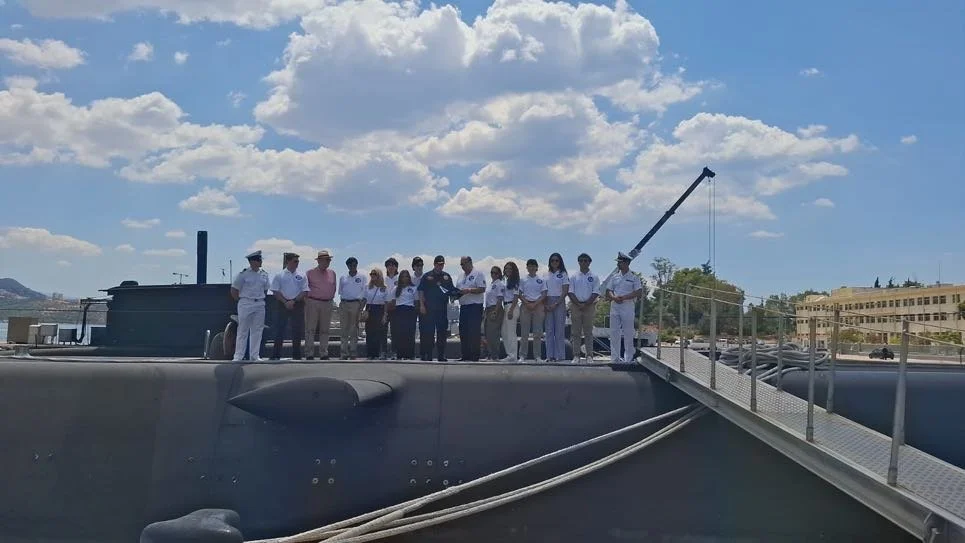
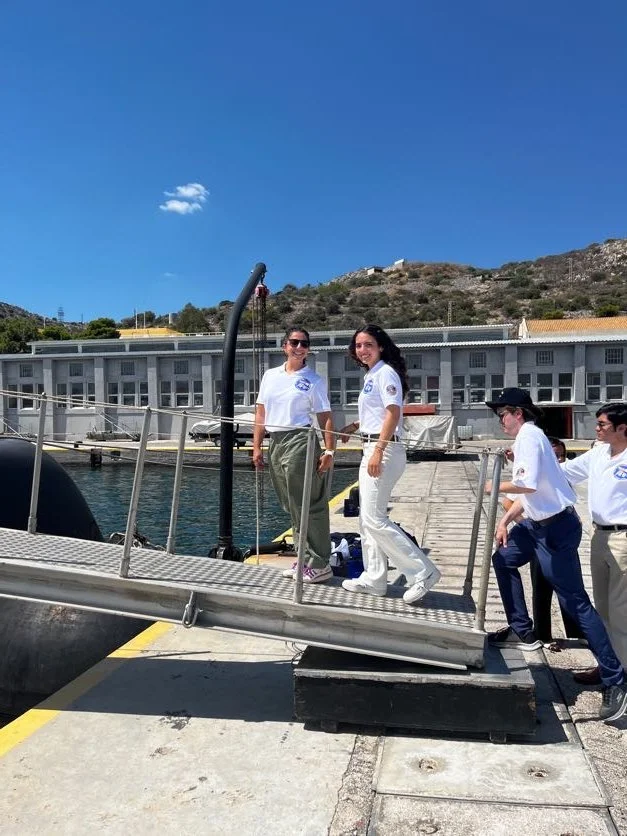
The students visited a Class 214 submarine and a frigate, receiving briefings that provided an inside look at the vessels and the operational capabilities of the Hellenic Navy. Vice Adm. Sasiakos later hosted the delegation for lunch at his residence.
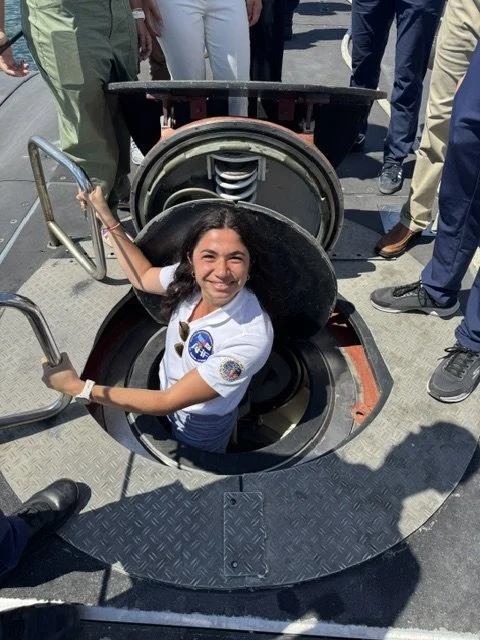
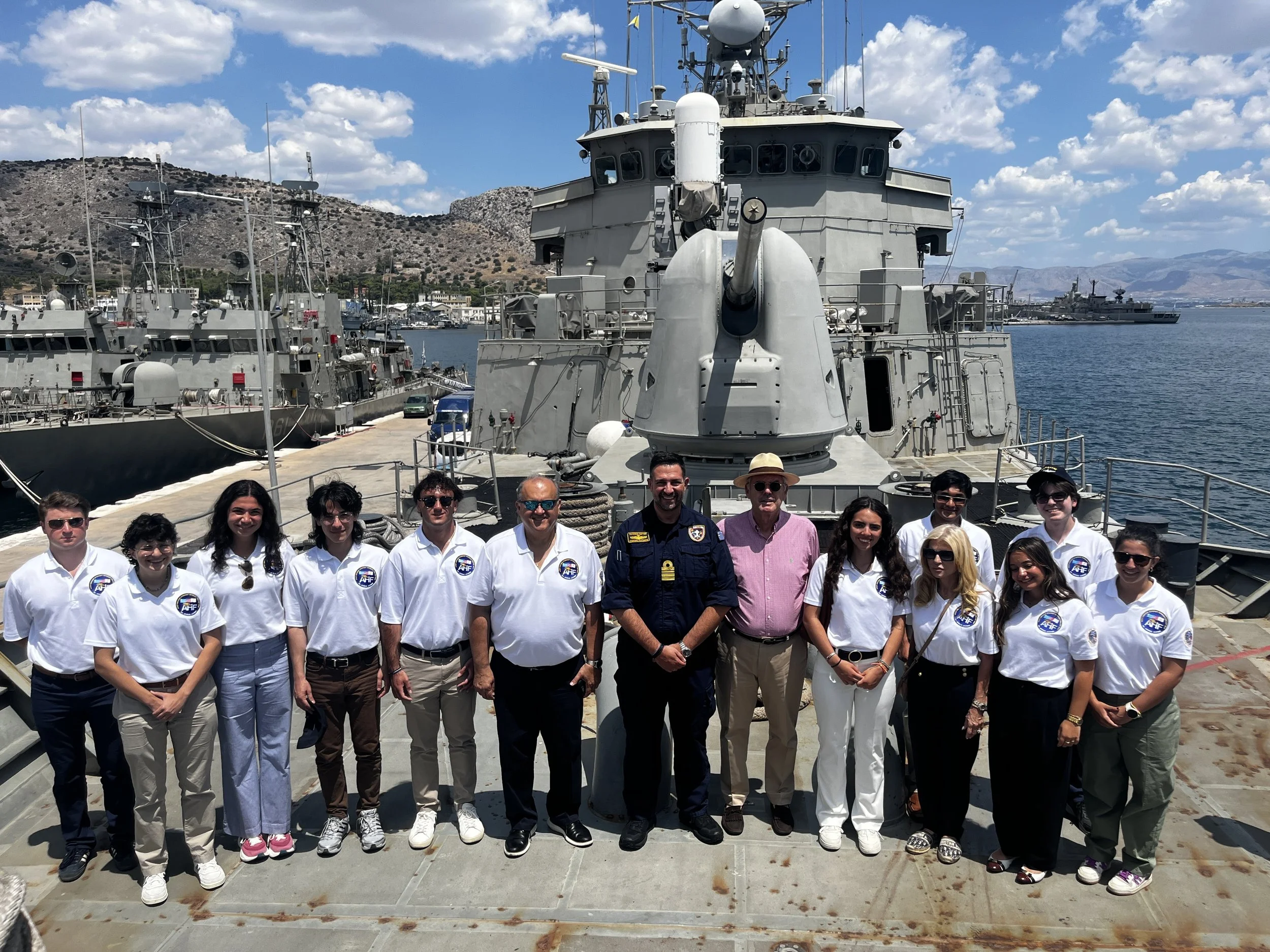
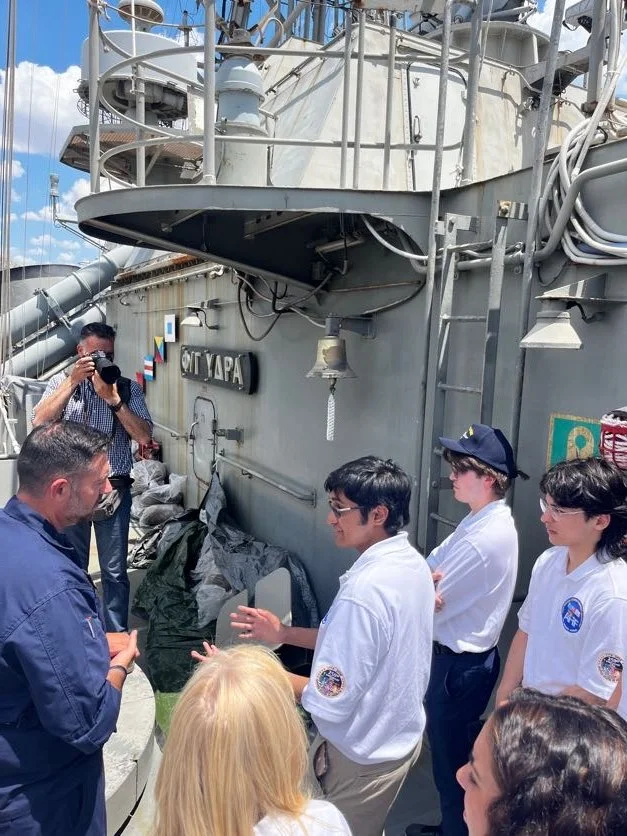
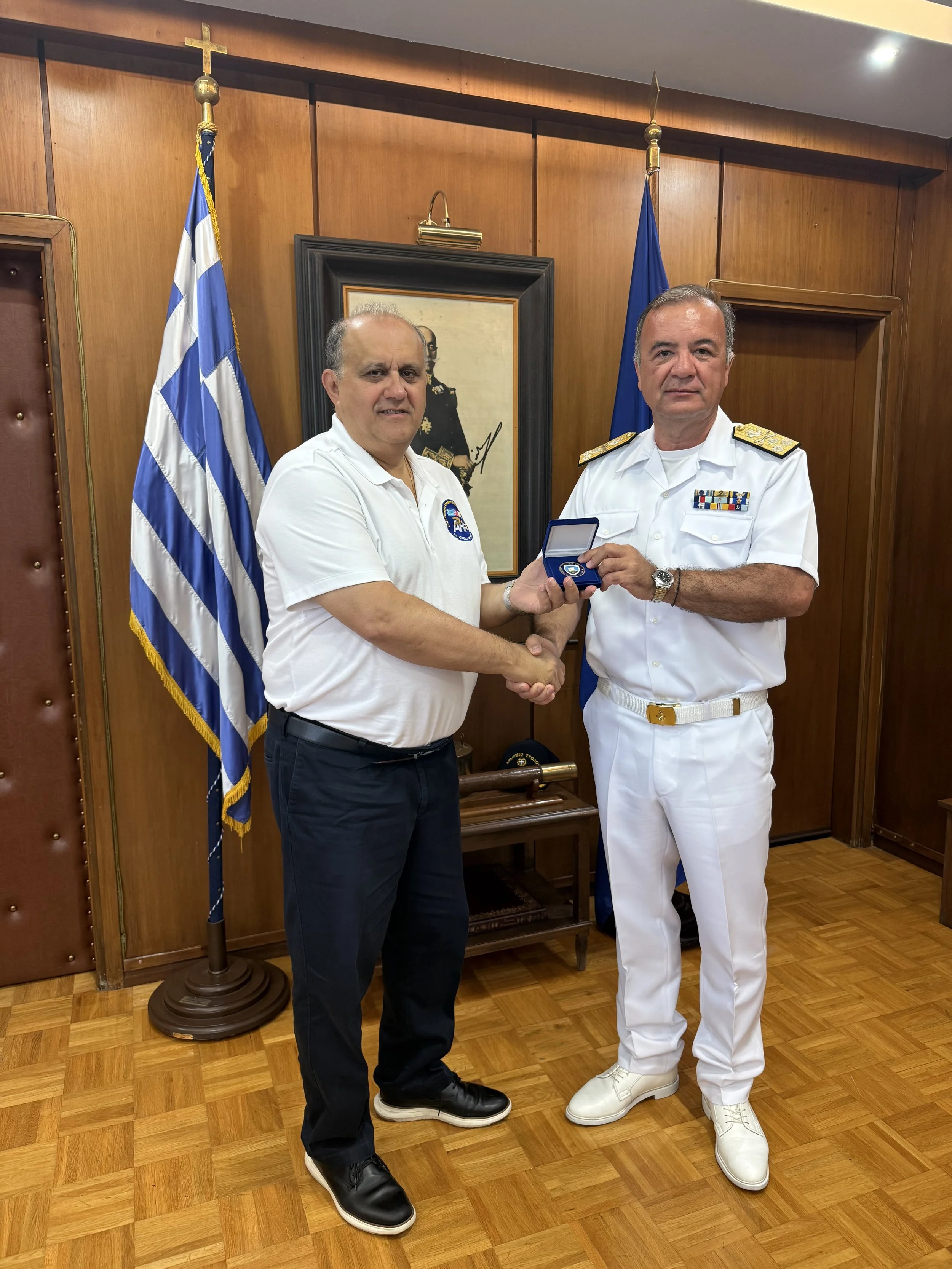
The delegation also met with Vice Admiral Christos Kontorouchas, Commandant of the Hellenic Coast Guard, and received a briefing from his staff on the service's responsibilities and contributions to maritime security.
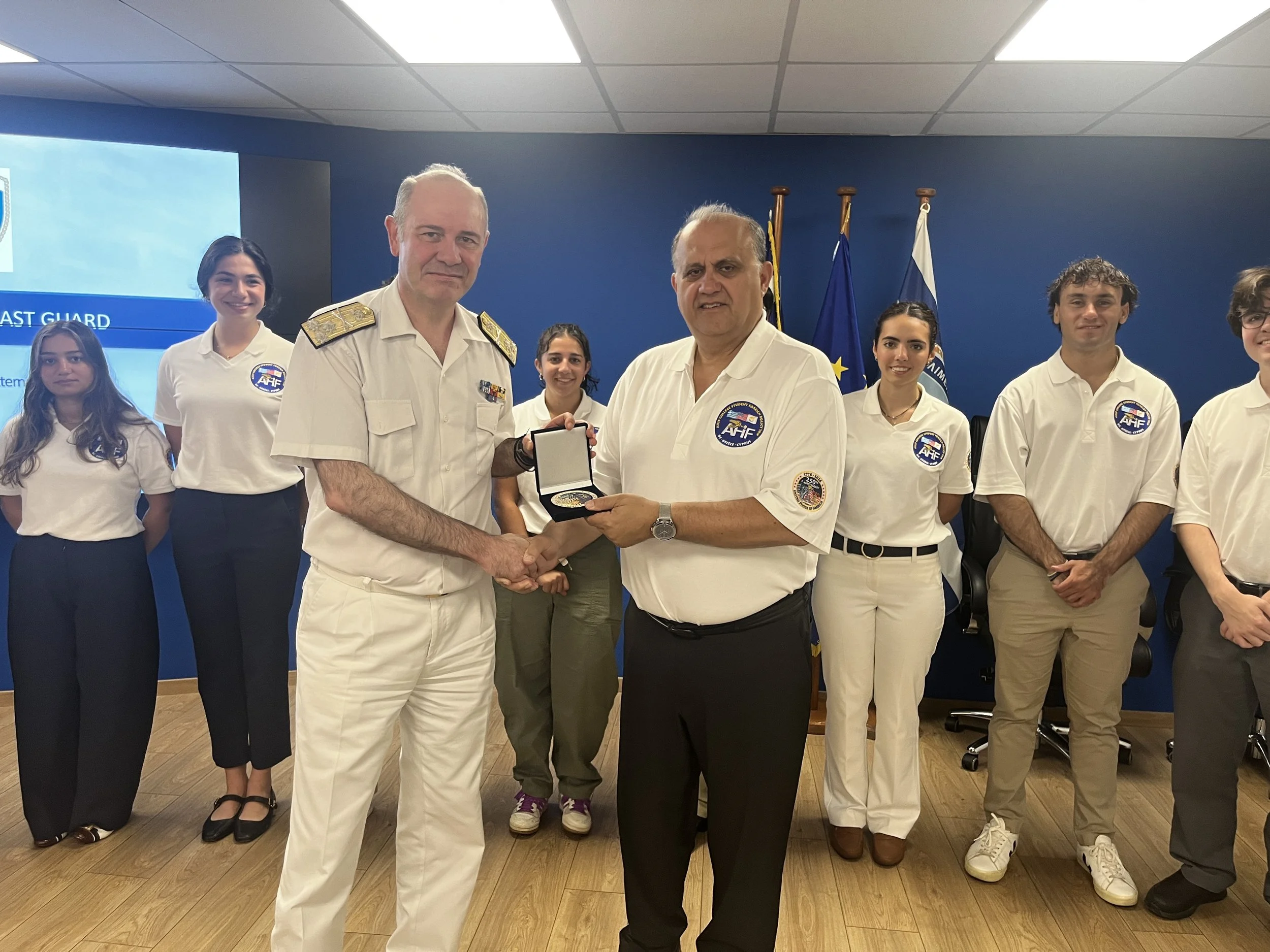
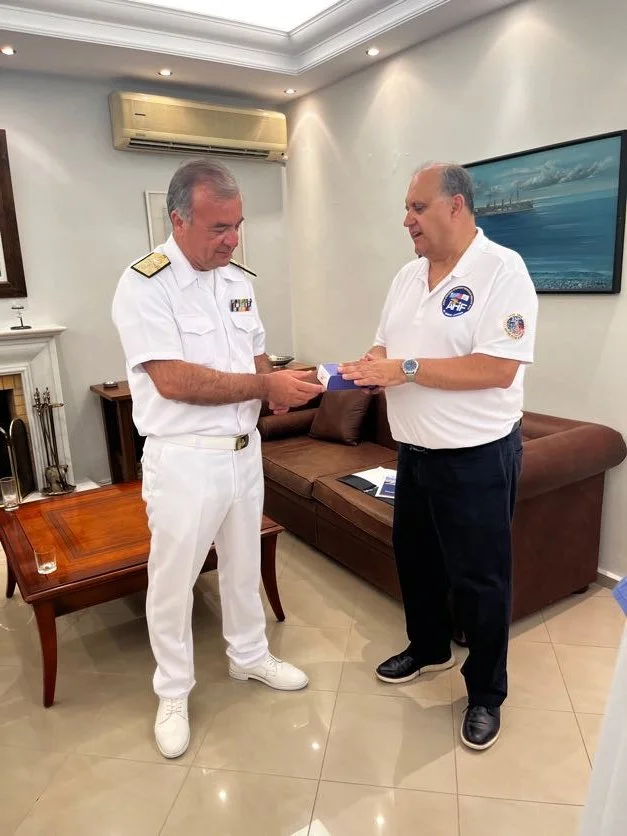
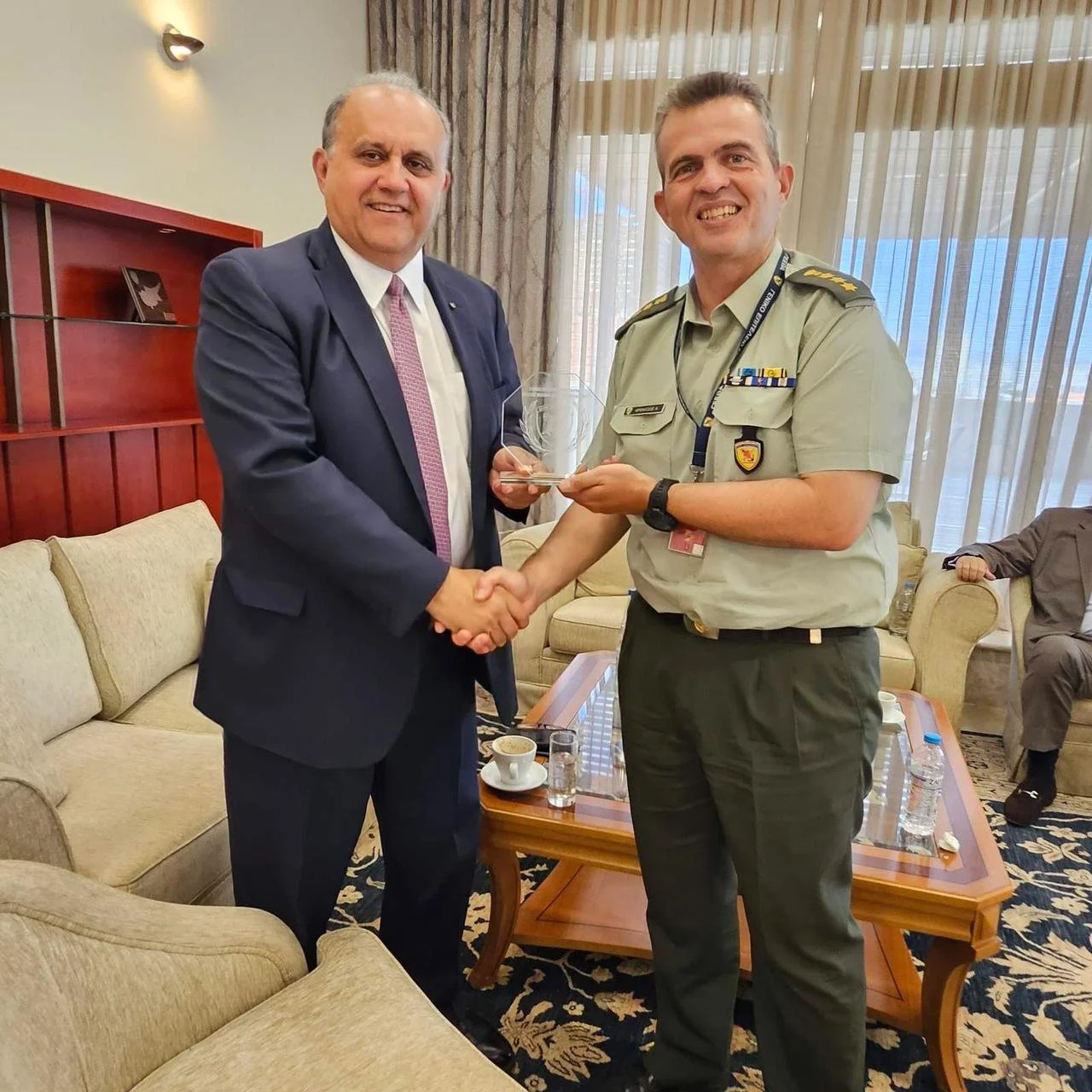
Nick Larigakis presents Vice Admiral HCG Christos Kontorouchas, Commandant of the Hellenic Coast Guard, with a commemorative gift.
Together, the engagements demonstrated the importance of Greece’s naval capabilities to protecting its maritime interests and supporting security in the Eastern Mediterranean.
Learning About Greece’s Defense Policy and Military Readiness
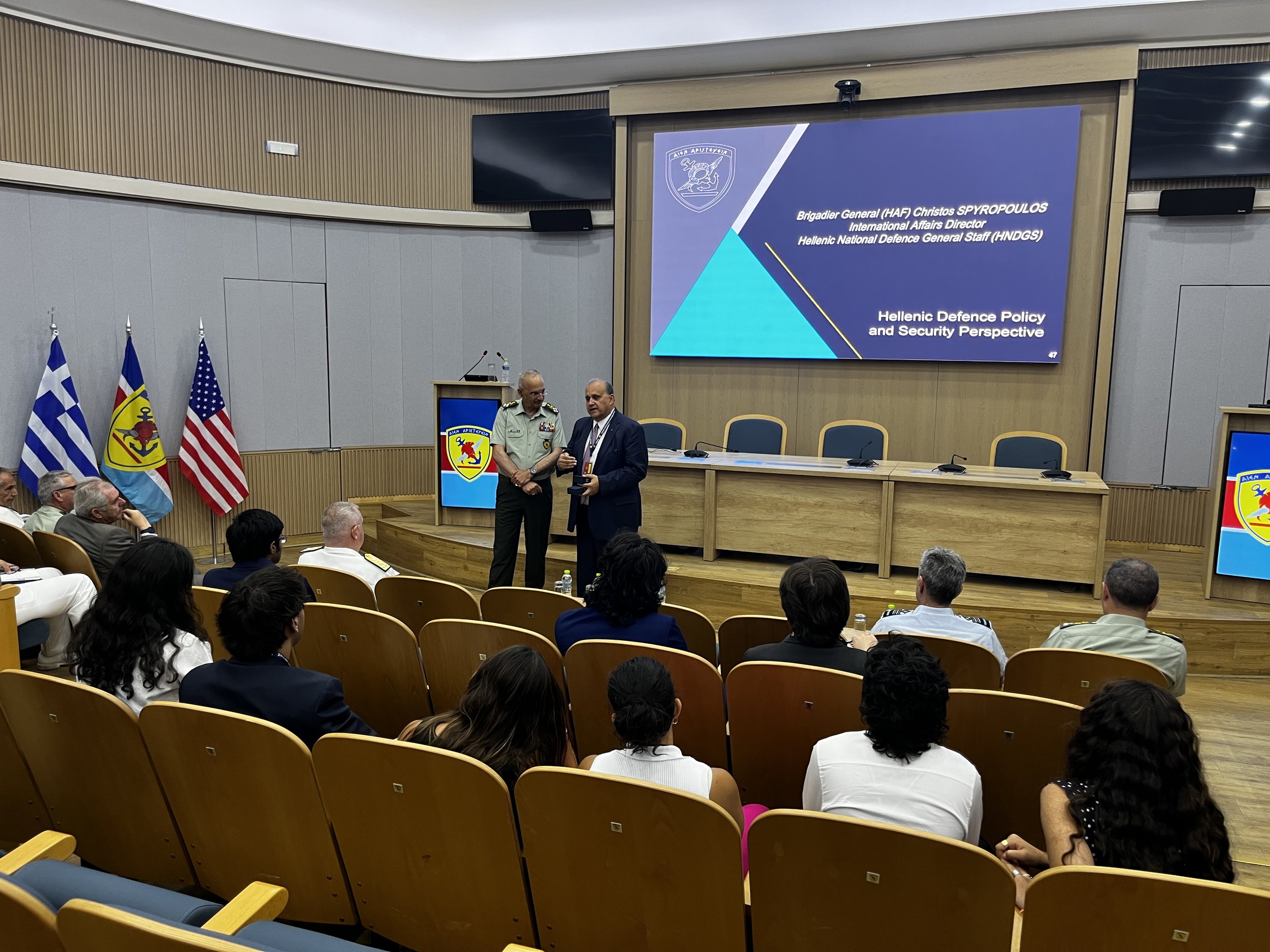
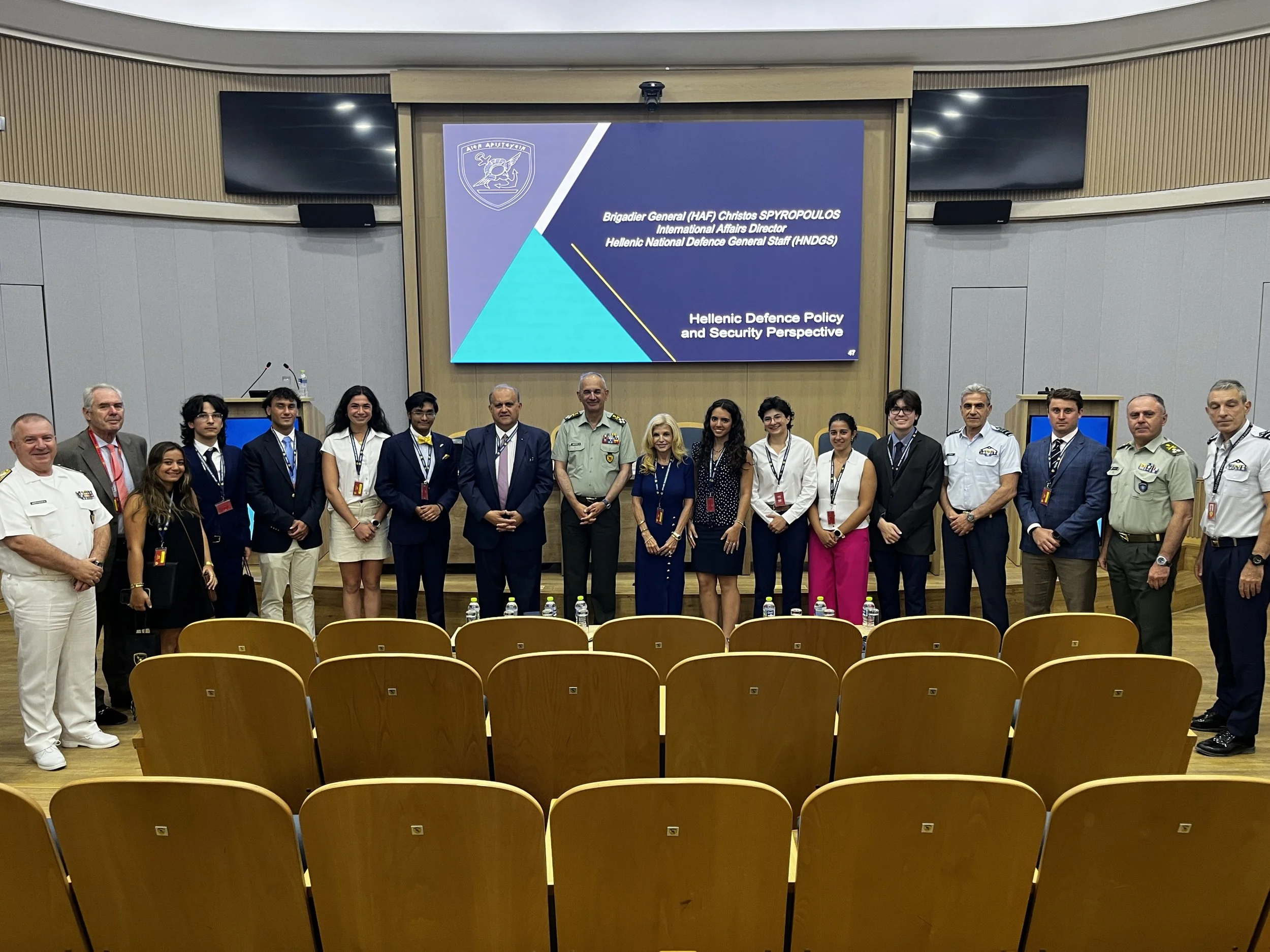
On July 7, the delegation visited the Greek Pentagon for a policy briefing with the Hellenic National Defense General Staff (HNDGS). General Dimitrios Choupis, Chief of the HNDGS, was present for the briefing and took questions from the students. The delegation also thanks Col. Andreas Frentzos, director of the Public Relations Directorate, for his help in coordinating the visit.
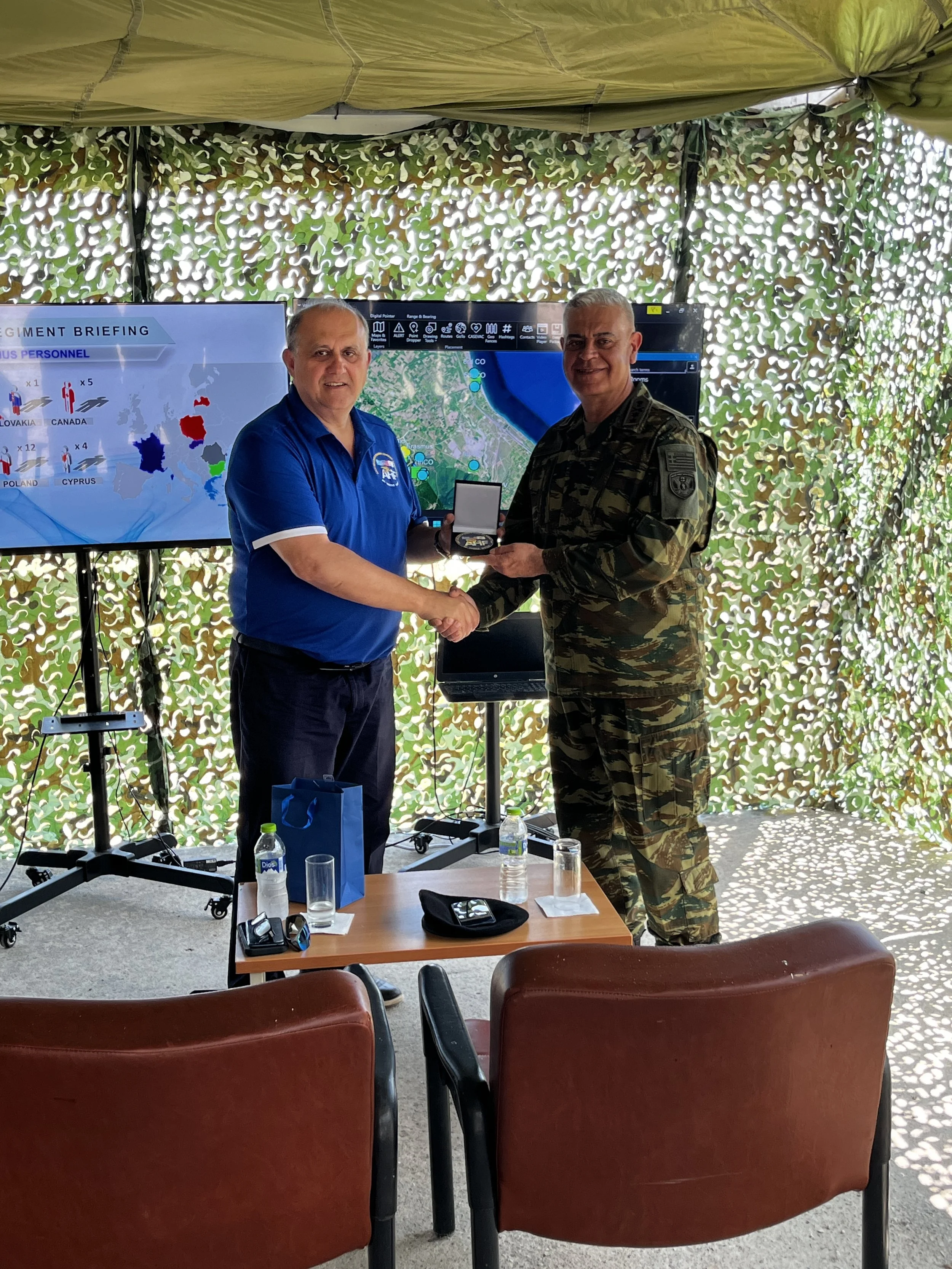
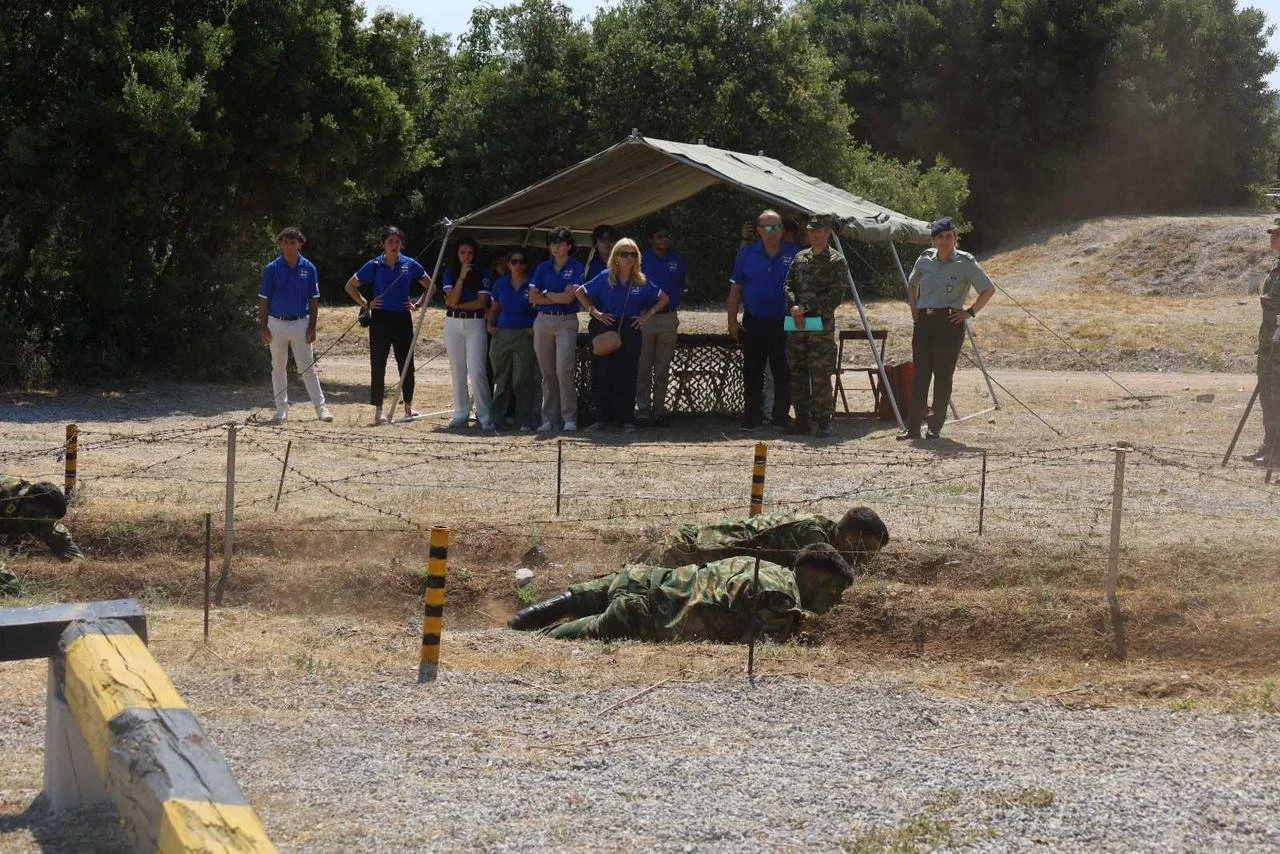
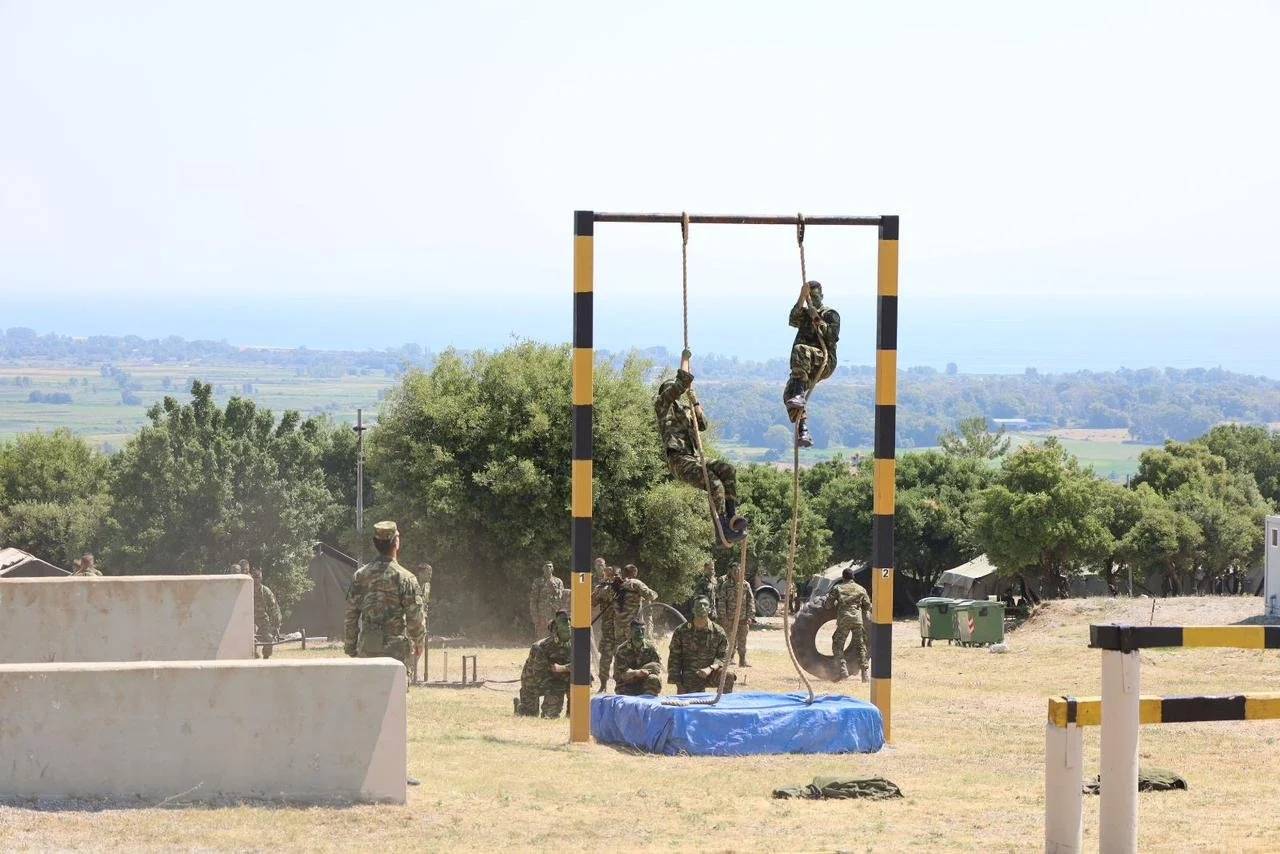
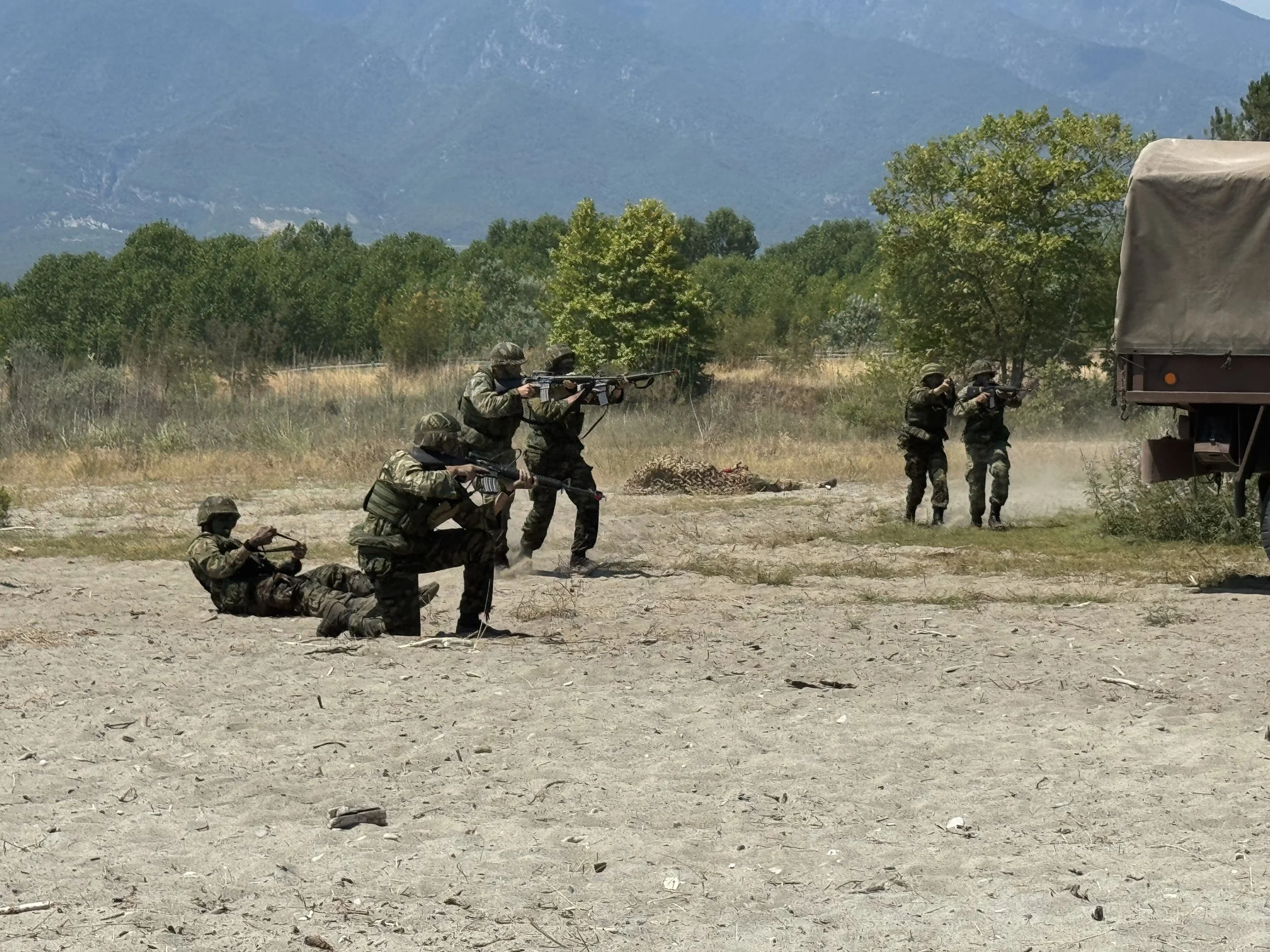
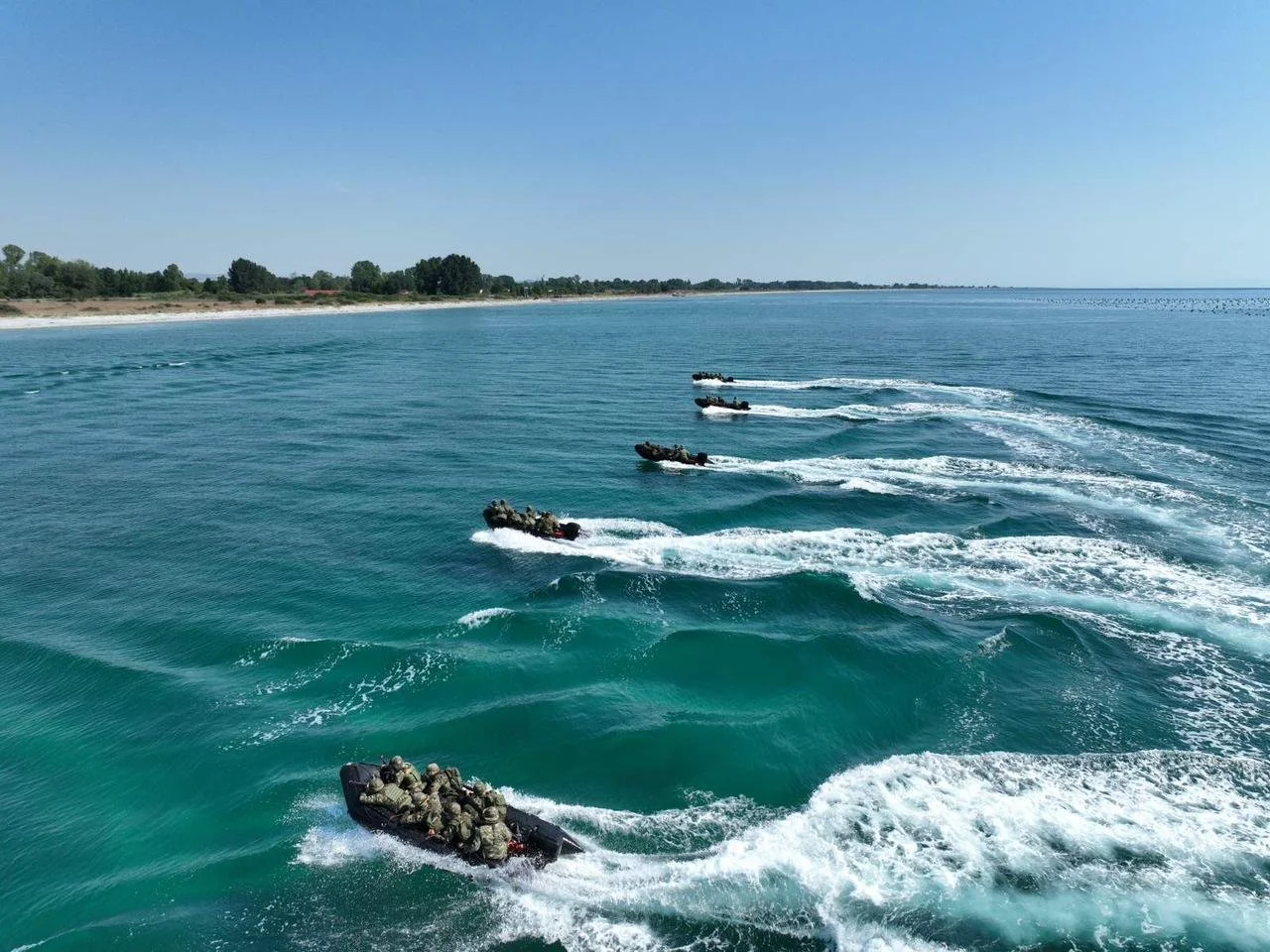
The following day, students traveled to Larissa to visit the Military Academy’s summer training center in Litochoro, where Maj. Gen. Vasileios Lambropoulos welcomed the delegation. A briefing and visit introduced students to the training and preparation of Greece’s future military officers.
The delegation then visited the Hellenic Tactical Air Force Command Headquarters in Larissa. Lt. Gen. Panagiotis Georgakopoulos welcomed the students and provided a briefing on the command’s mission and the role of Greece’s air capabilities.
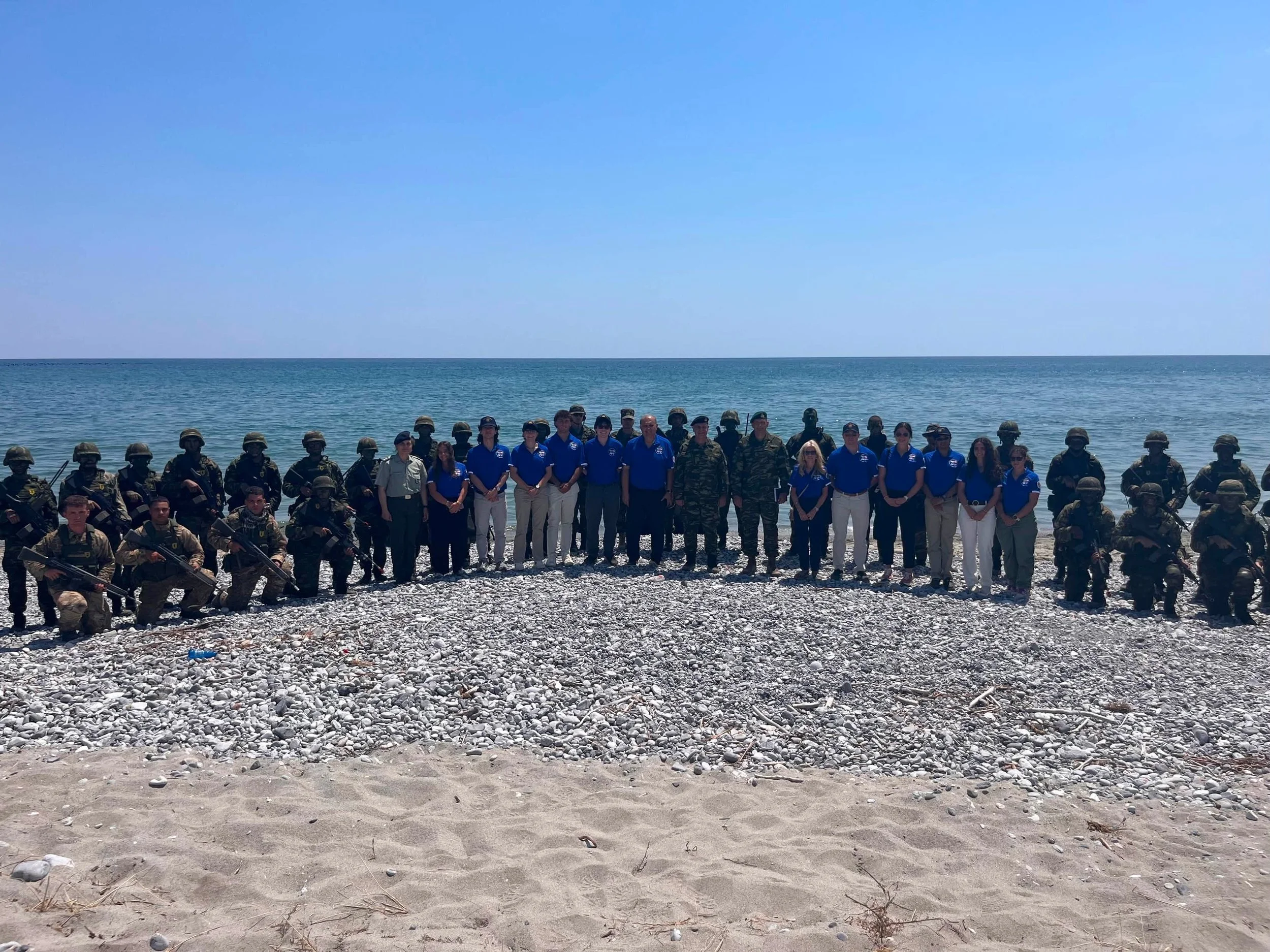
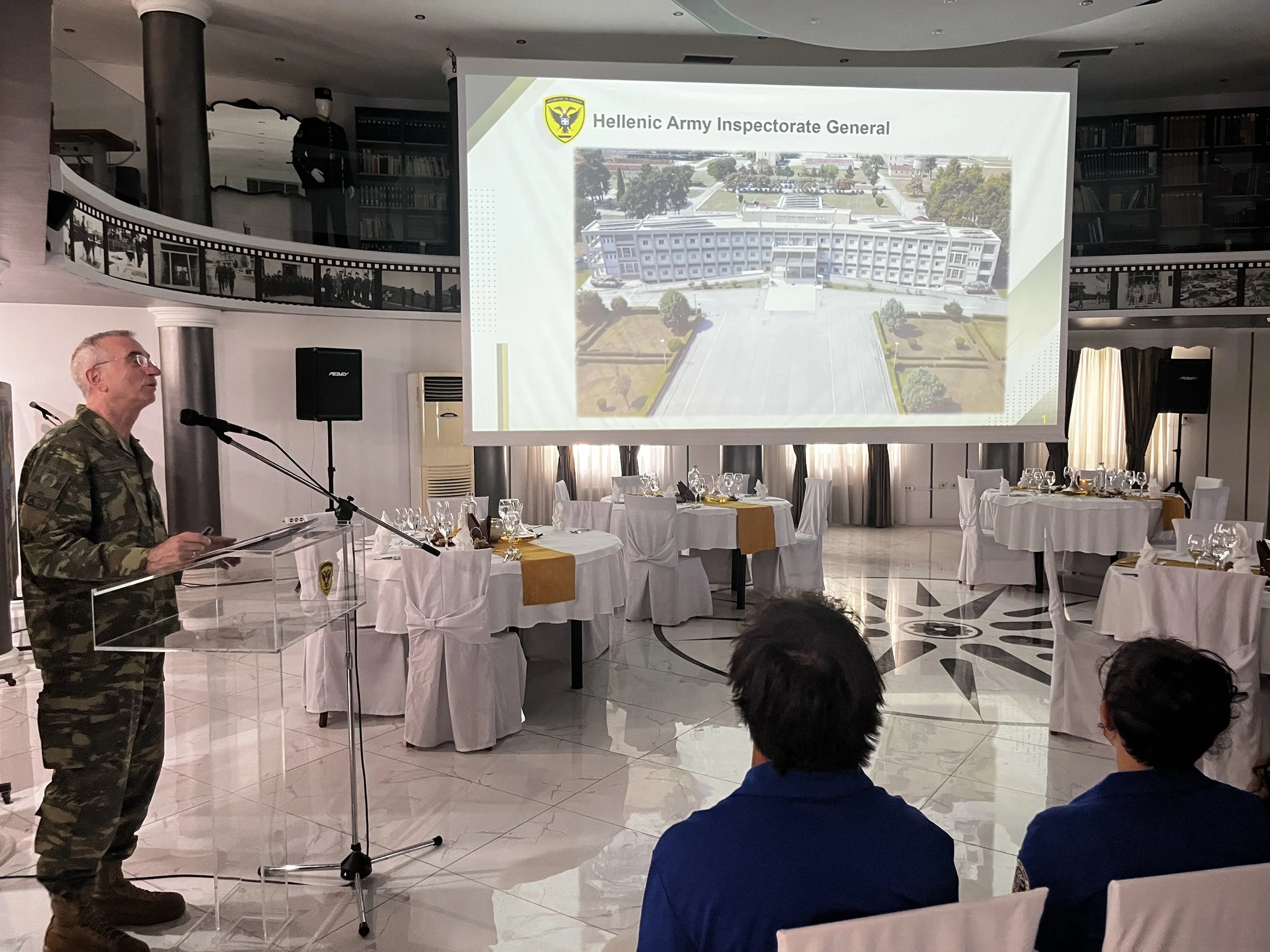
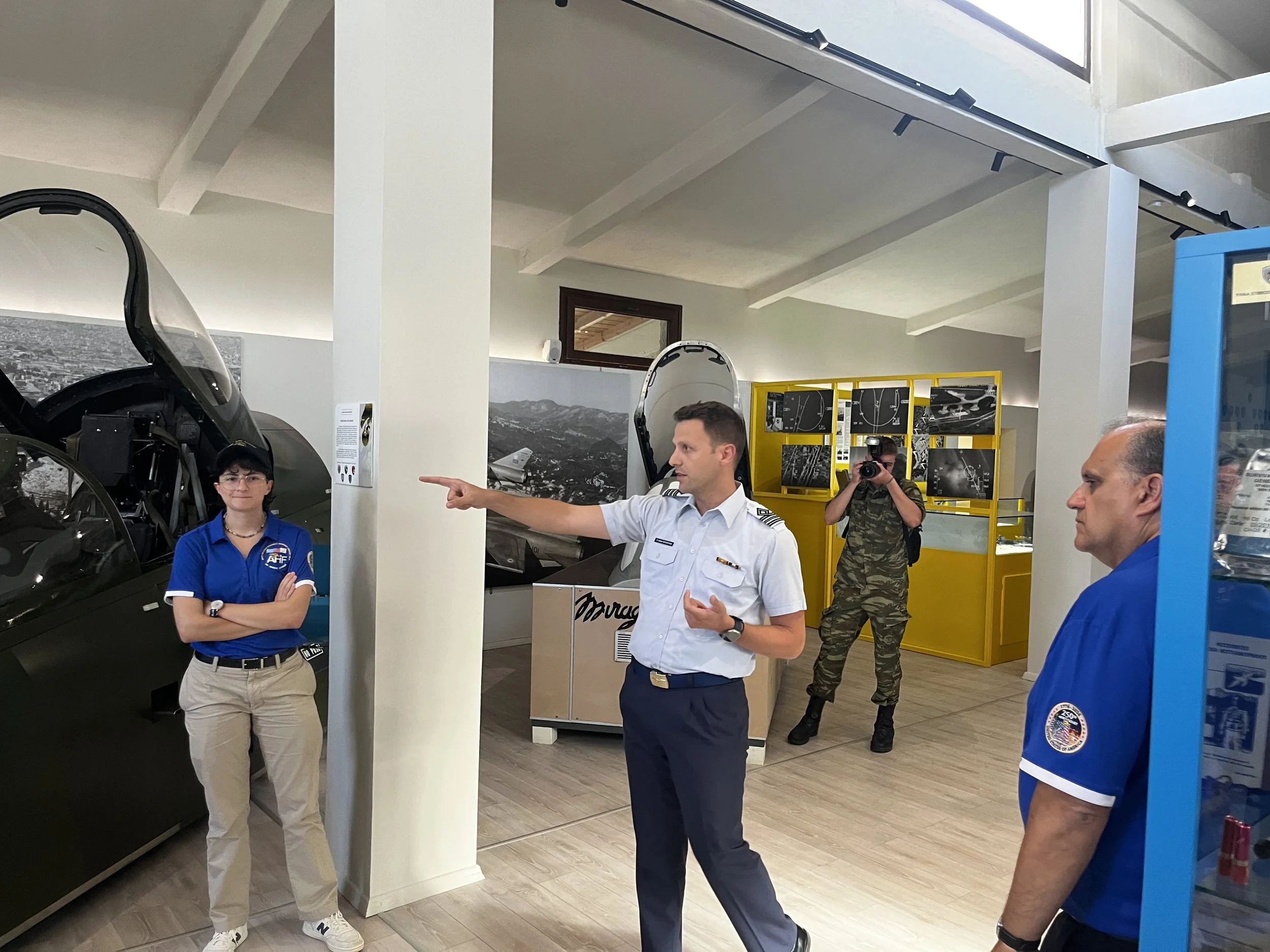
“Before this trip I saw Greece and Cyprus as stable and reliable allies America had in protecting its interests in Europe,” said Demetrios Lahiri, Junior at Southern Methodist University “but I now see that Greece and Cyprus serve the US in a unique and indispensable role, in protecting American interests in Europe, Asia, and the Middle East and are vital in protecting the world from the threats there America must deal with.”
About the AHIF College Student Foreign Policy Trip
Now in its 18th year, the AHIF College Student Foreign Policy Trip is a three-week immersive program that offers undergraduate and graduate students a unique opportunity to explore U.S. policy interests in Greece, the Republic of Cyprus and the Eastern Mediterranean. Through direct engagement with government officials and military, diplomatic, religious and civic leaders, participants gain firsthand insight into the region’s political, security, economic and cultural dynamics. The 2026 program began with briefings in Washington, D.C., followed by visits to Cyprus and Greece.