

AHIF Students Gain Firsthand Understanding of Cyprus’ Security, Diplomacy and Continuing Occupation
No. 56
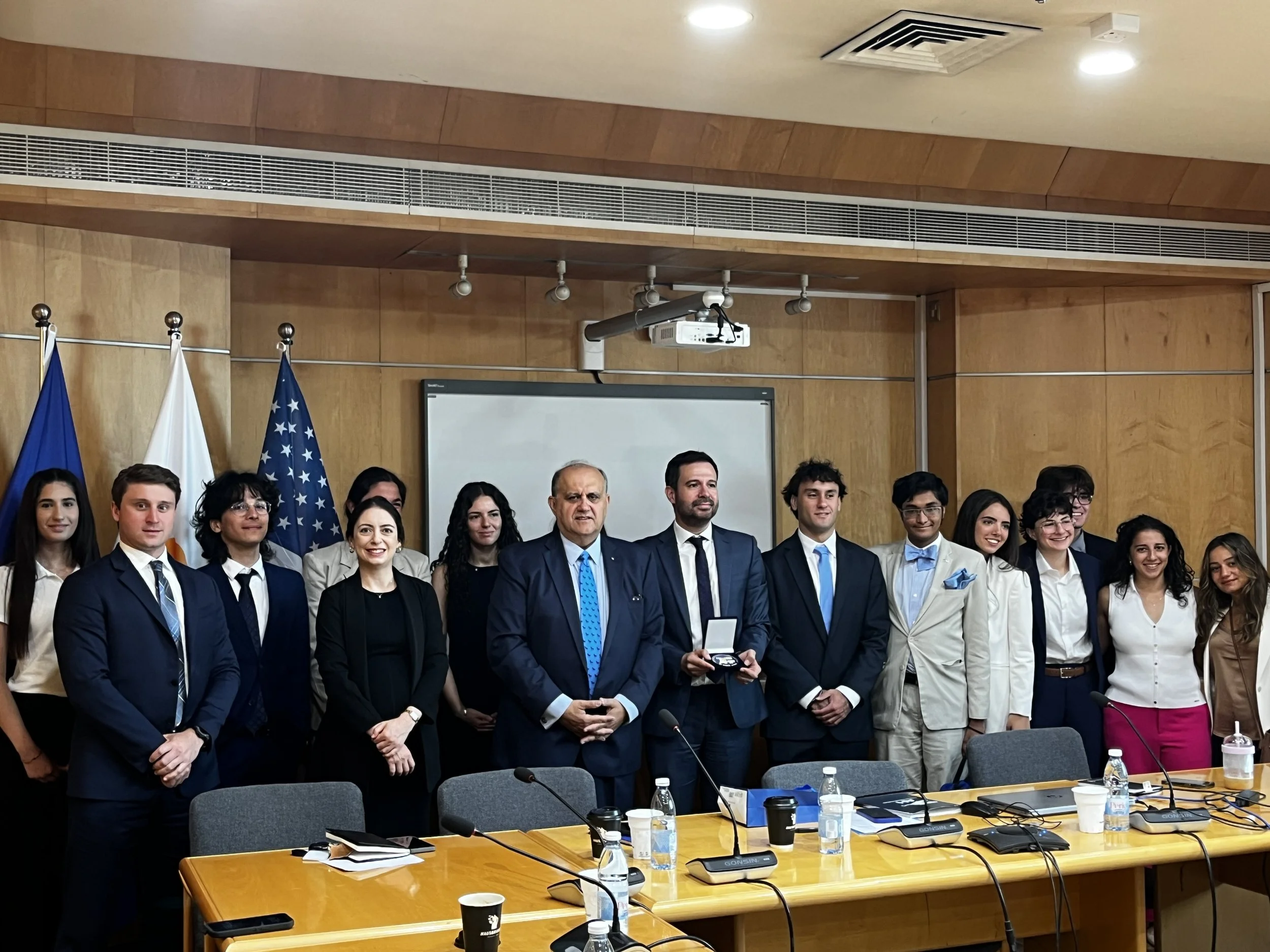
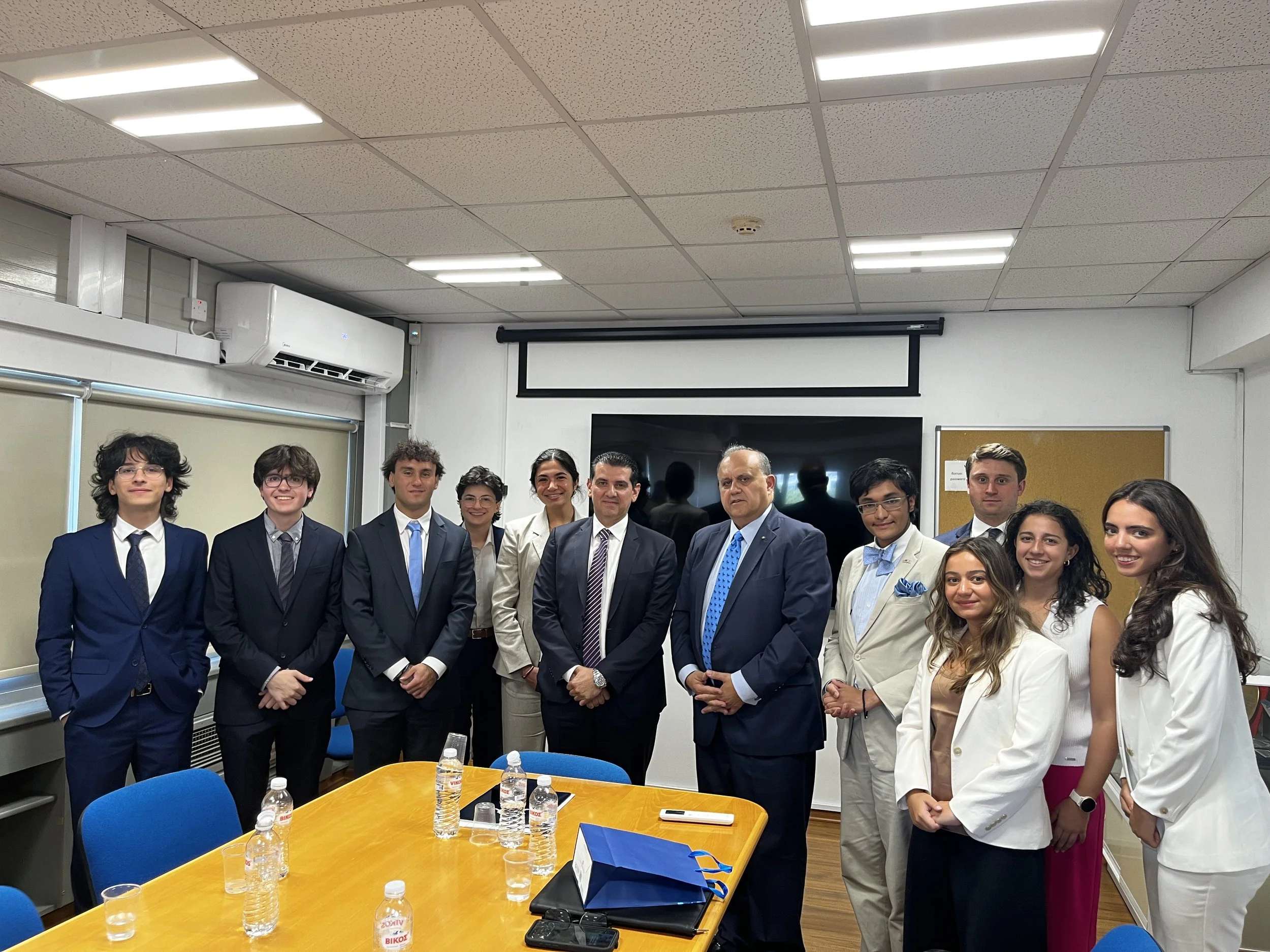
NICOSIA — College students participating in the American Hellenic Institute Foundation’s (AHIF) 2026 College Student Foreign Policy Trip engaged directly with Cyprus’ political, diplomatic, defense and religious leaders while gaining a firsthand understanding of the island’s 52-year occupation and growing strategic importance to the United States.
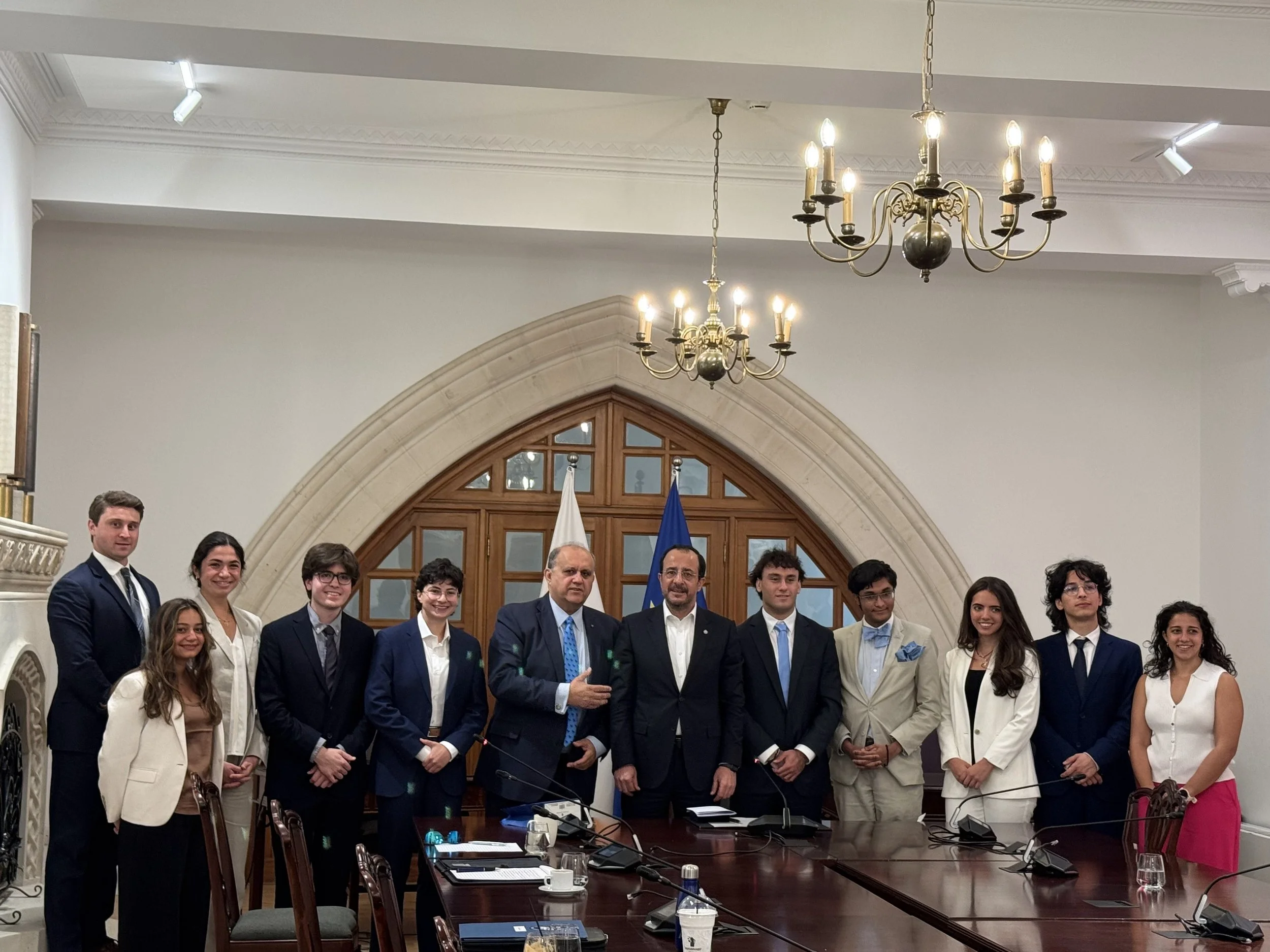
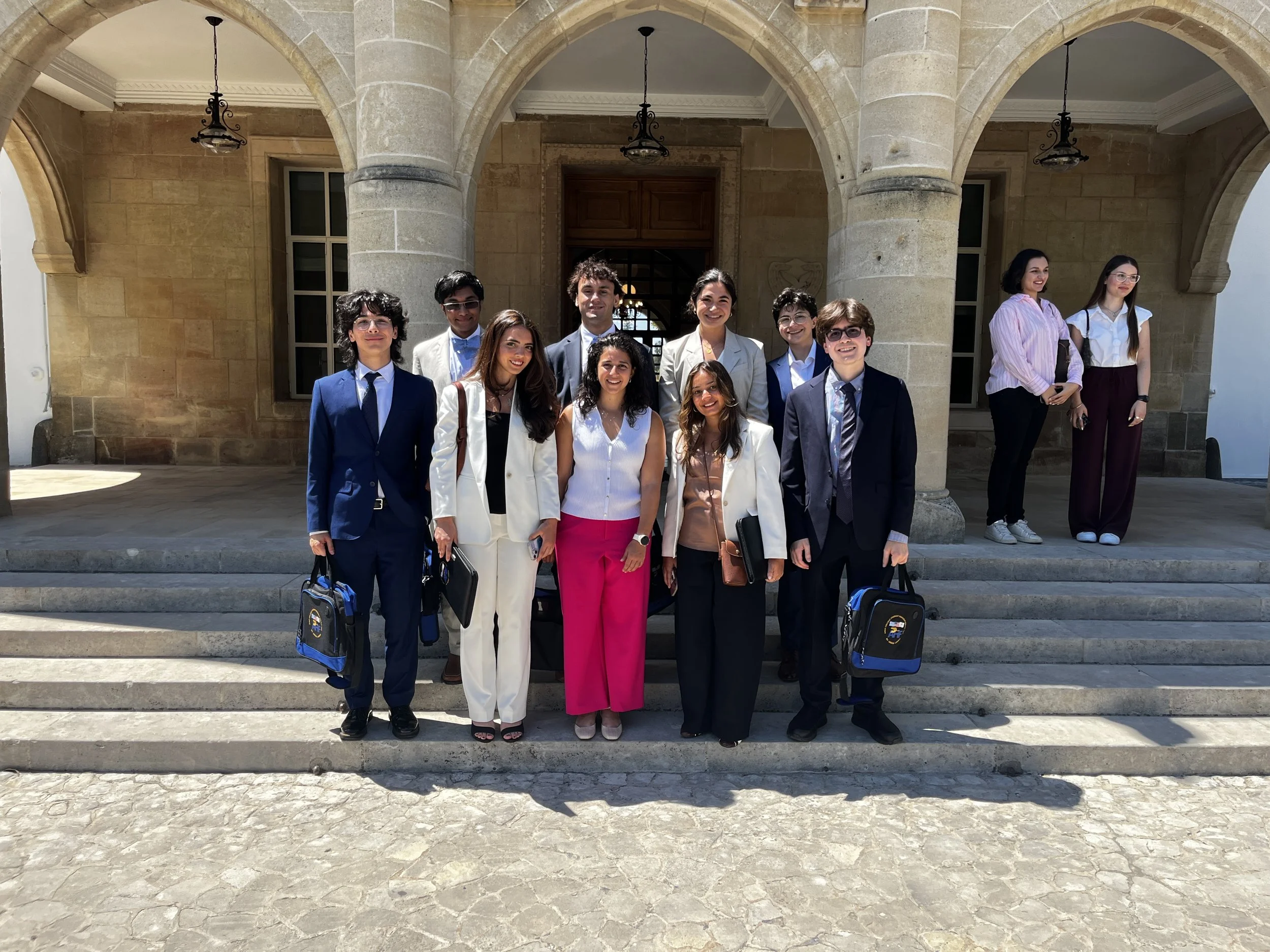
Held June 25-July 1, the Cyprus segment combined high-level meetings and security briefings with visits to historical, religious and cultural sites. Students met with President of the Republic of Cyprus Nikos Christodoulides, visited the Turkish-occupied area and examined Cyprus’ expanding role as a regional partner committed to security, stability and the rule of law in the Eastern Mediterranean.
“Students often hear about the Cyprus issue in their communities but witnessing the consequences of Turkey’s invasion and continuing occupation and speaking directly with Cyprus’ leaders provide an entirely different level of understanding,” AHI President Nick Larigakis said. “The program also allowed students to see how the Republic of Cyprus has emerged as a reliable and increasingly important strategic partner of the United States.”
Engaging Cyprus’ Political and Diplomatic Leadership
A highlight of the program came June 29, when President Christodoulides welcomed the delegation to the Presidential Palace. The students discussed the Cyprus issue, regional developments and the Republic of Cyprus’ role in advancing security and cooperation in the Eastern Mediterranean. They also toured the Presidential Palace.
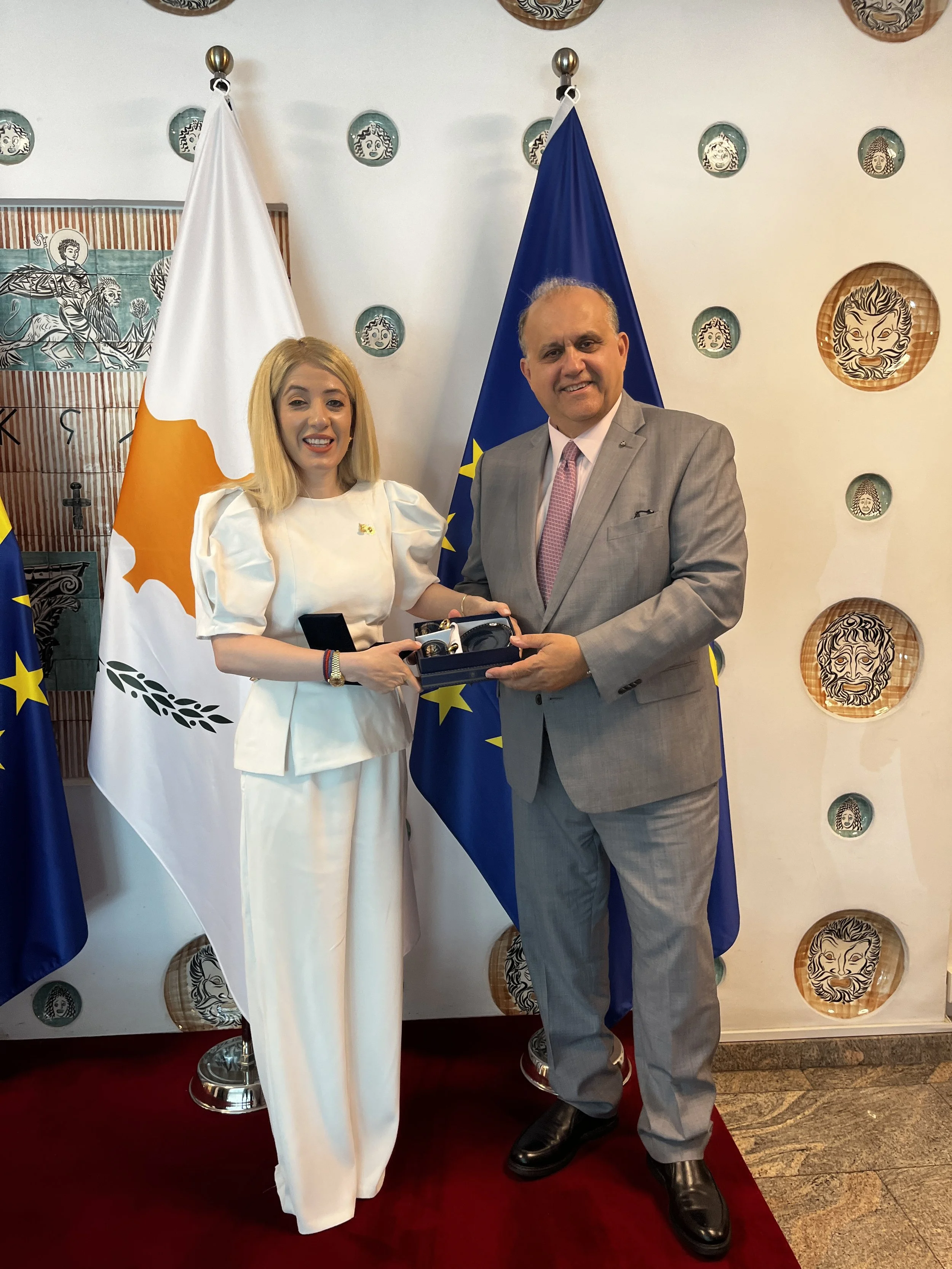
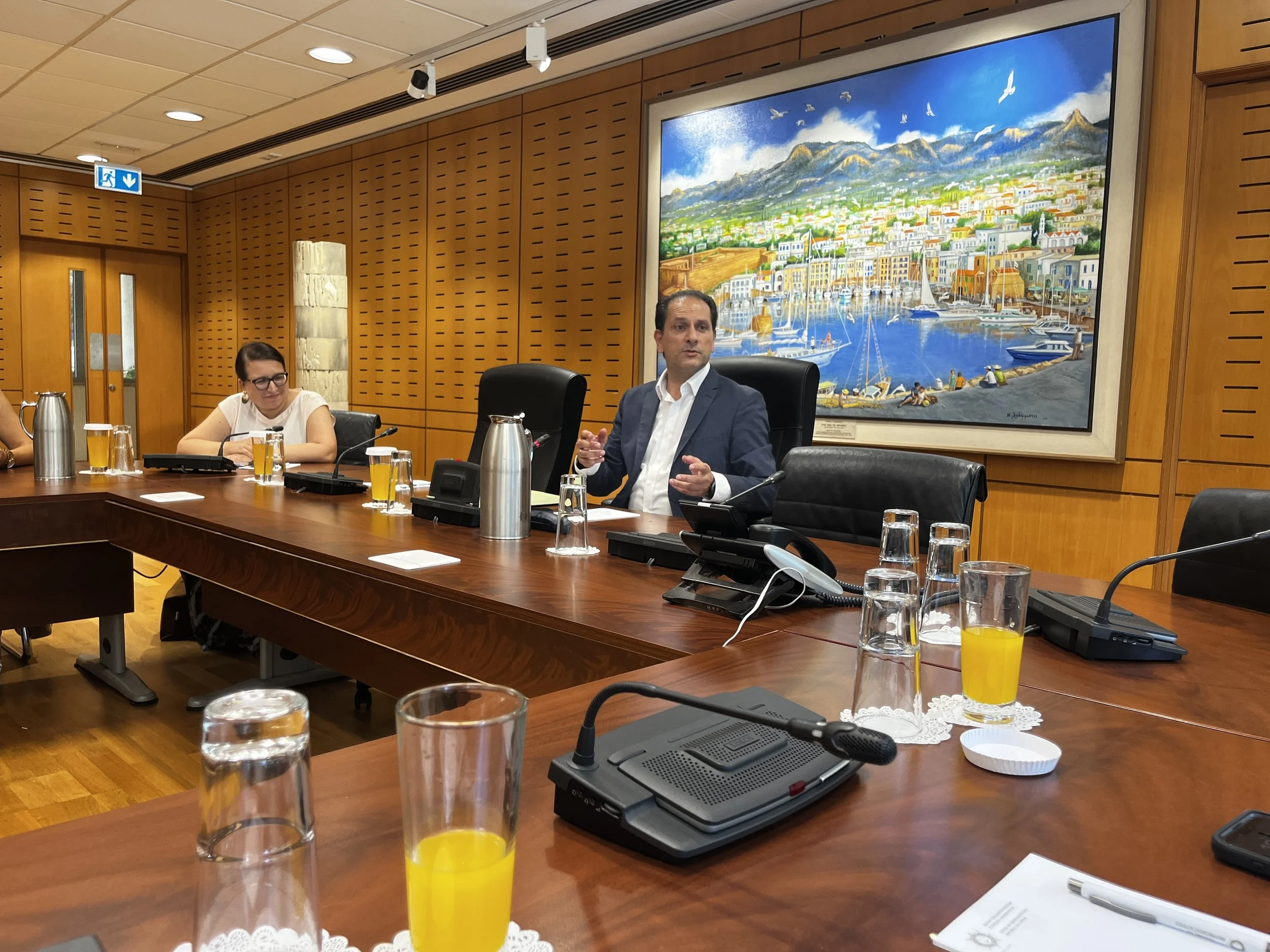
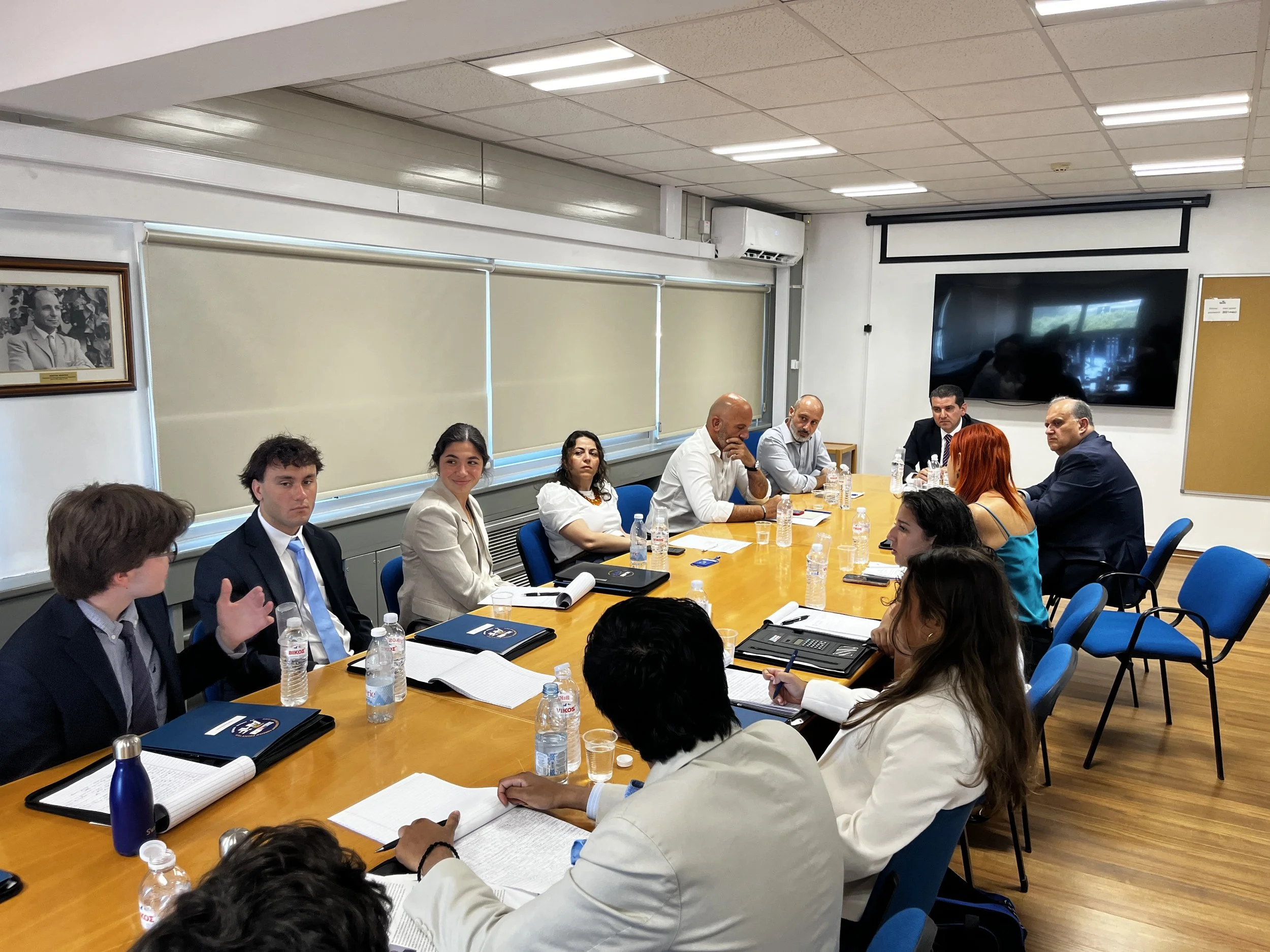
The delegation met with Haris Chrysostomou, head of the America Department at the Ministry of Foreign Affairs, and Michael Damianos, Minister of Energy, Commerce and Industry. The discussions provided insight into Cyprus’ foreign policy priorities, its relationship with the United States and its growing economic and energy role in the region.
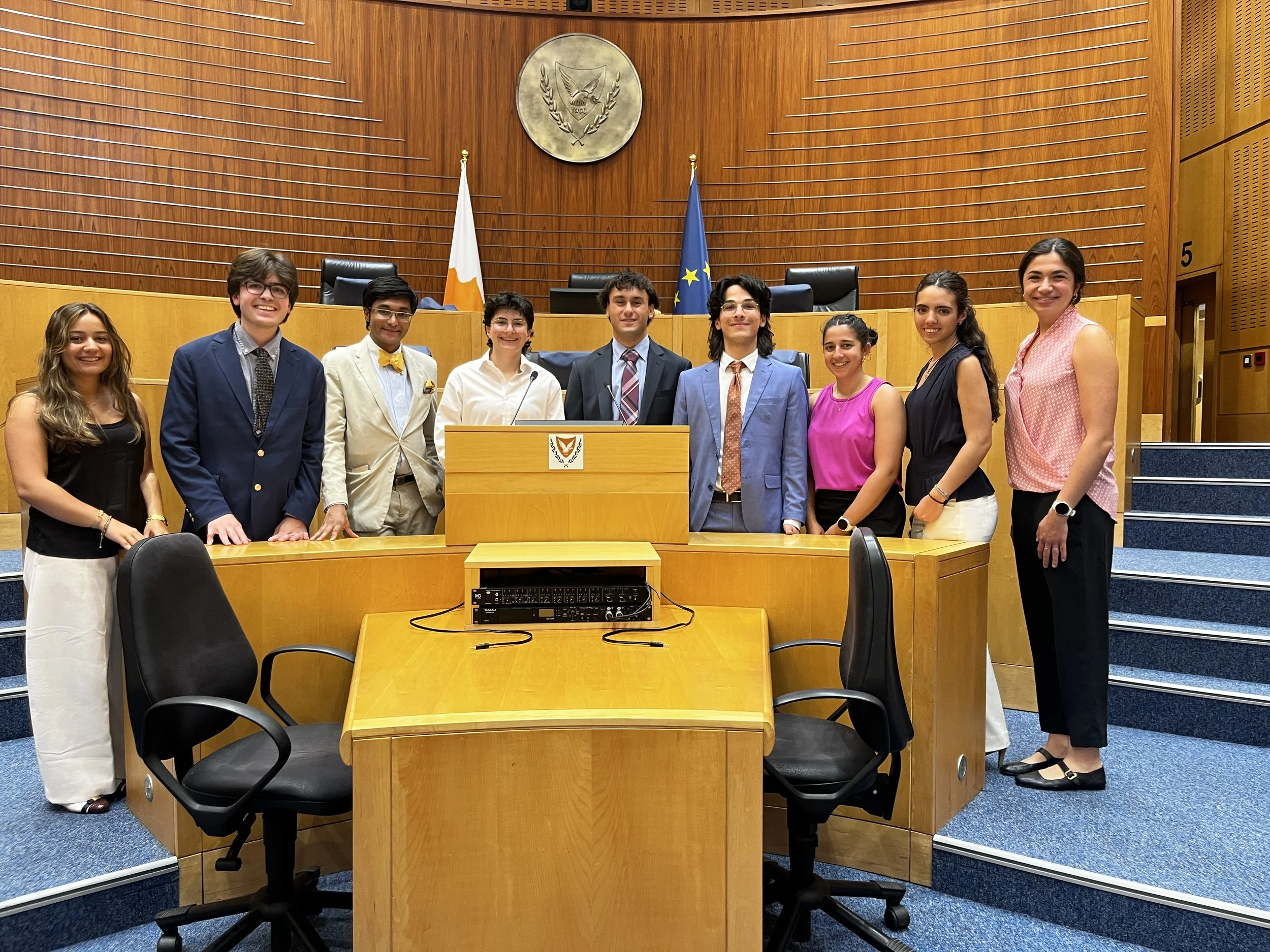
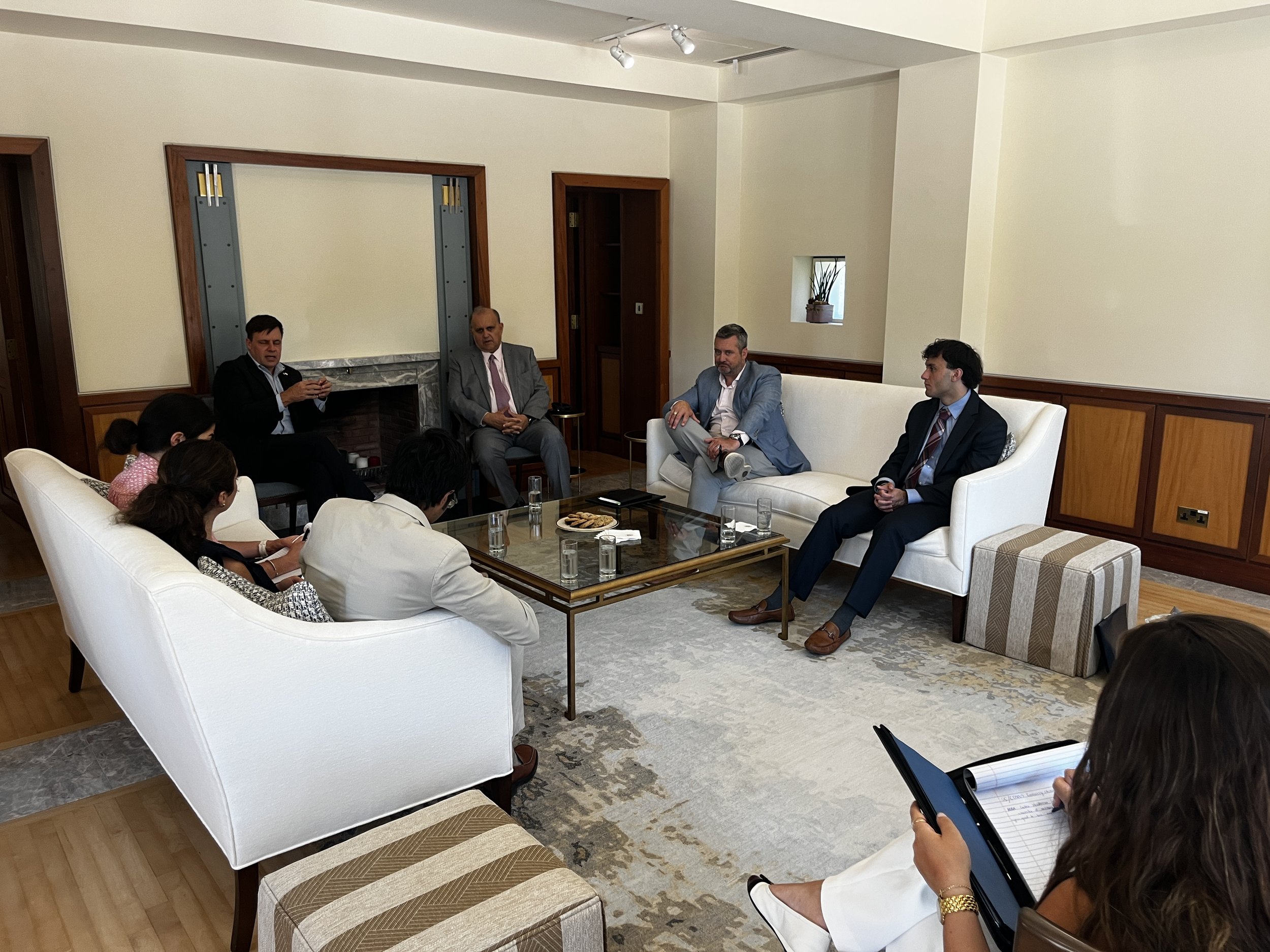
Earlier in the program, students met with Aristos Damianou, Chairman of the Standing Committee on Internal Affairs of the Cypriot House of Representatives, and Dr. Daniel Mangis, chargé d’affaires at the U.S. Embassy in Cyprus. These meetings offered perspectives on Cyprus’ democratic institutions, the bilateral relationship and the importance of continued U.S. engagement in the region.
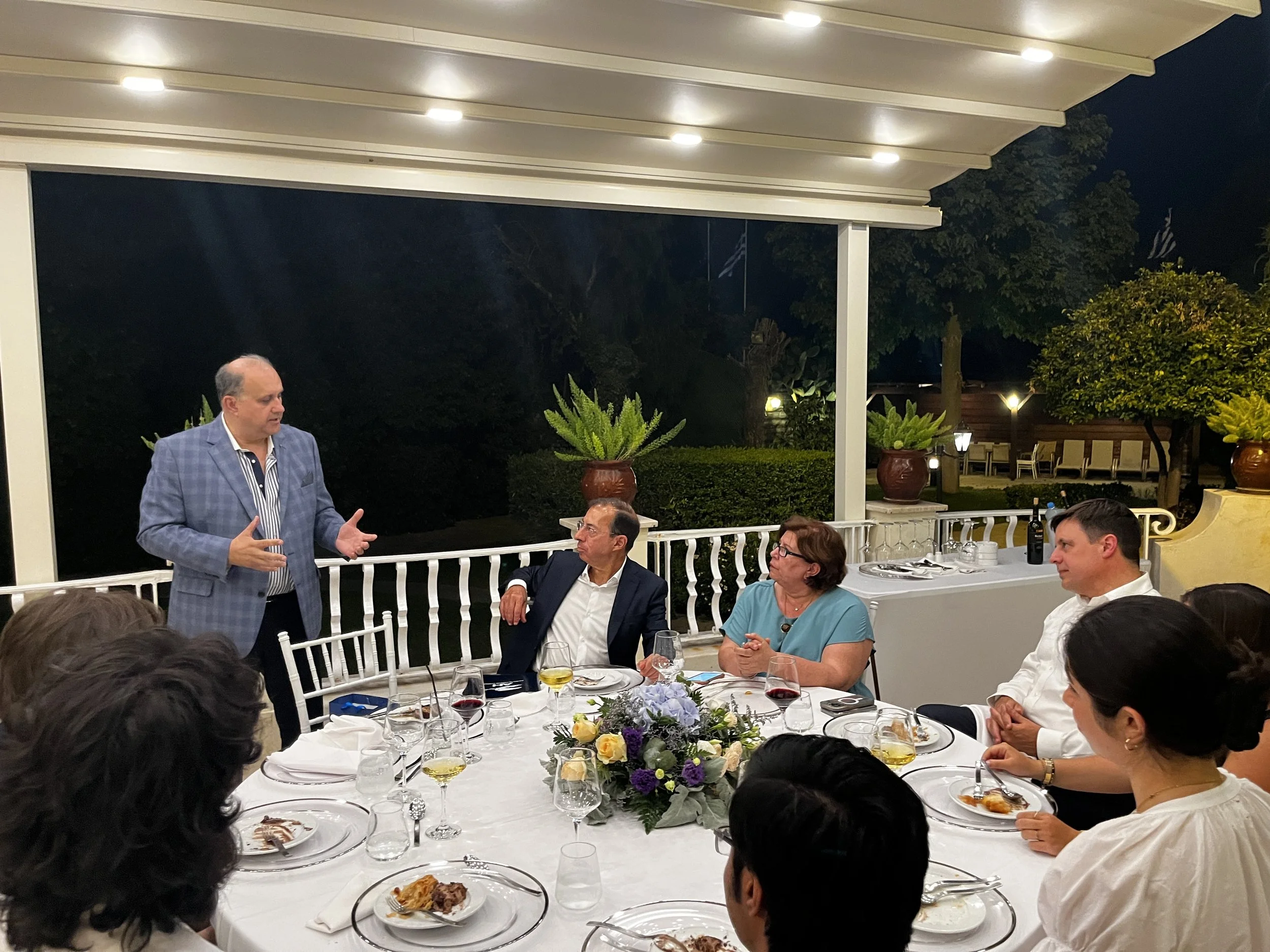
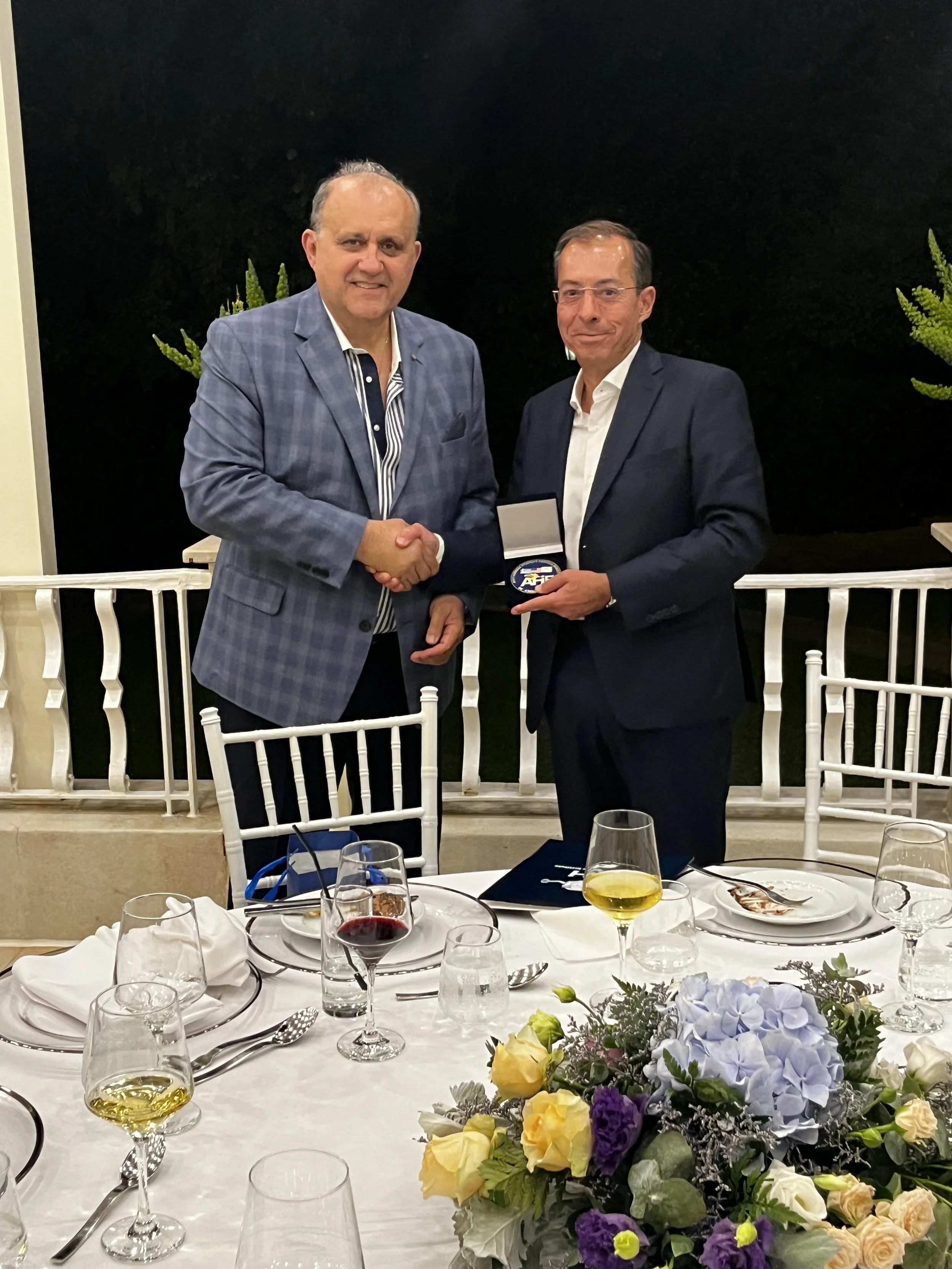
The students also met with Constantinos Kollias, Ambassador of Greece to Cyprus, who hosted the delegation for a dinner and reception at his residence in Nicosia.
A Visit to Occupied Cyprus: Witnessing the Continuing Impact of the Cyprus Issue
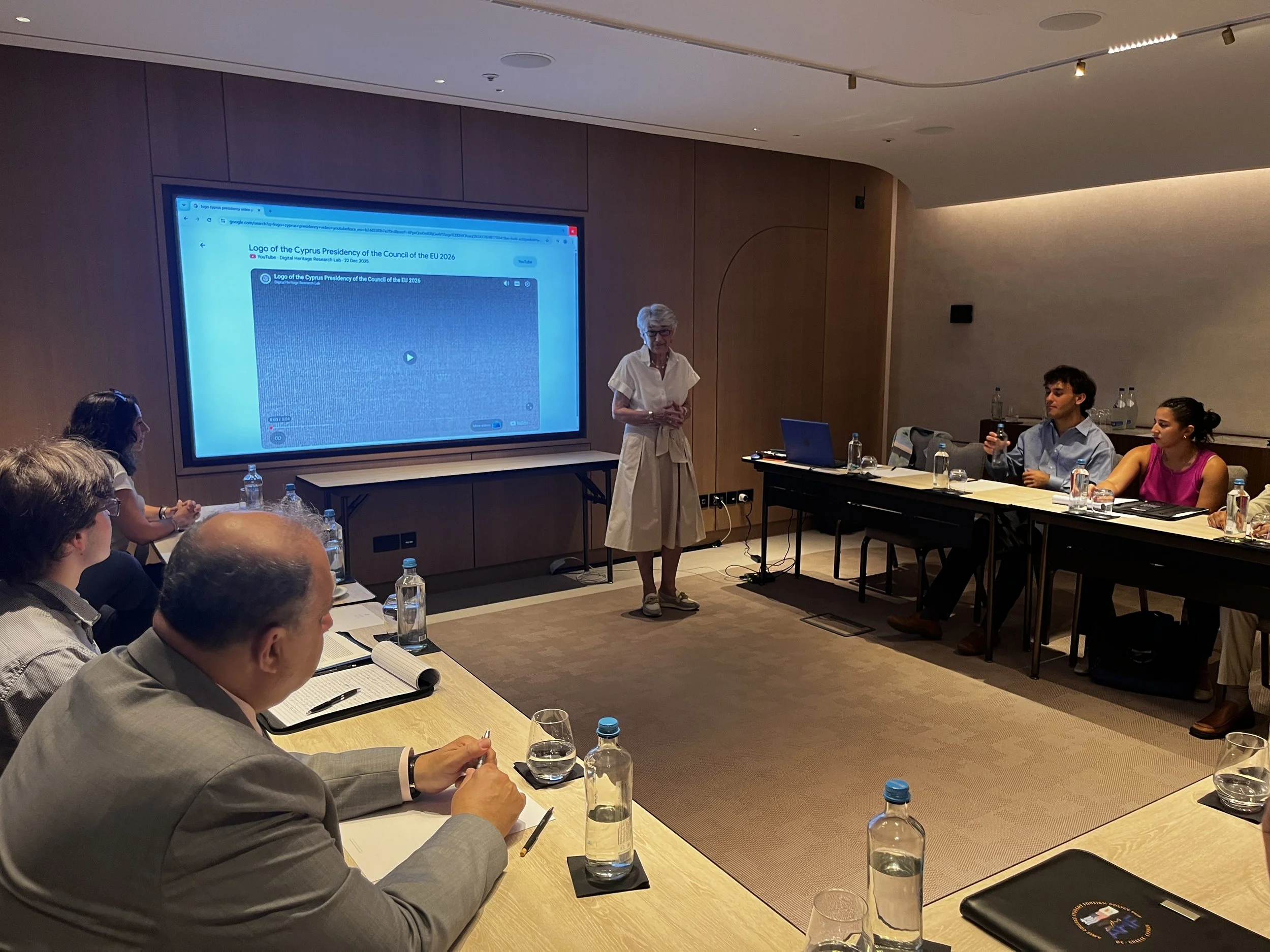
As part of the Cyprus program, students received a briefing by Titina Loizidou on the island's history and the events surrounding Turkey's 1974 invasion and ongoing occupation. The presentation provided an important foundation for the meetings and experiences that followed.
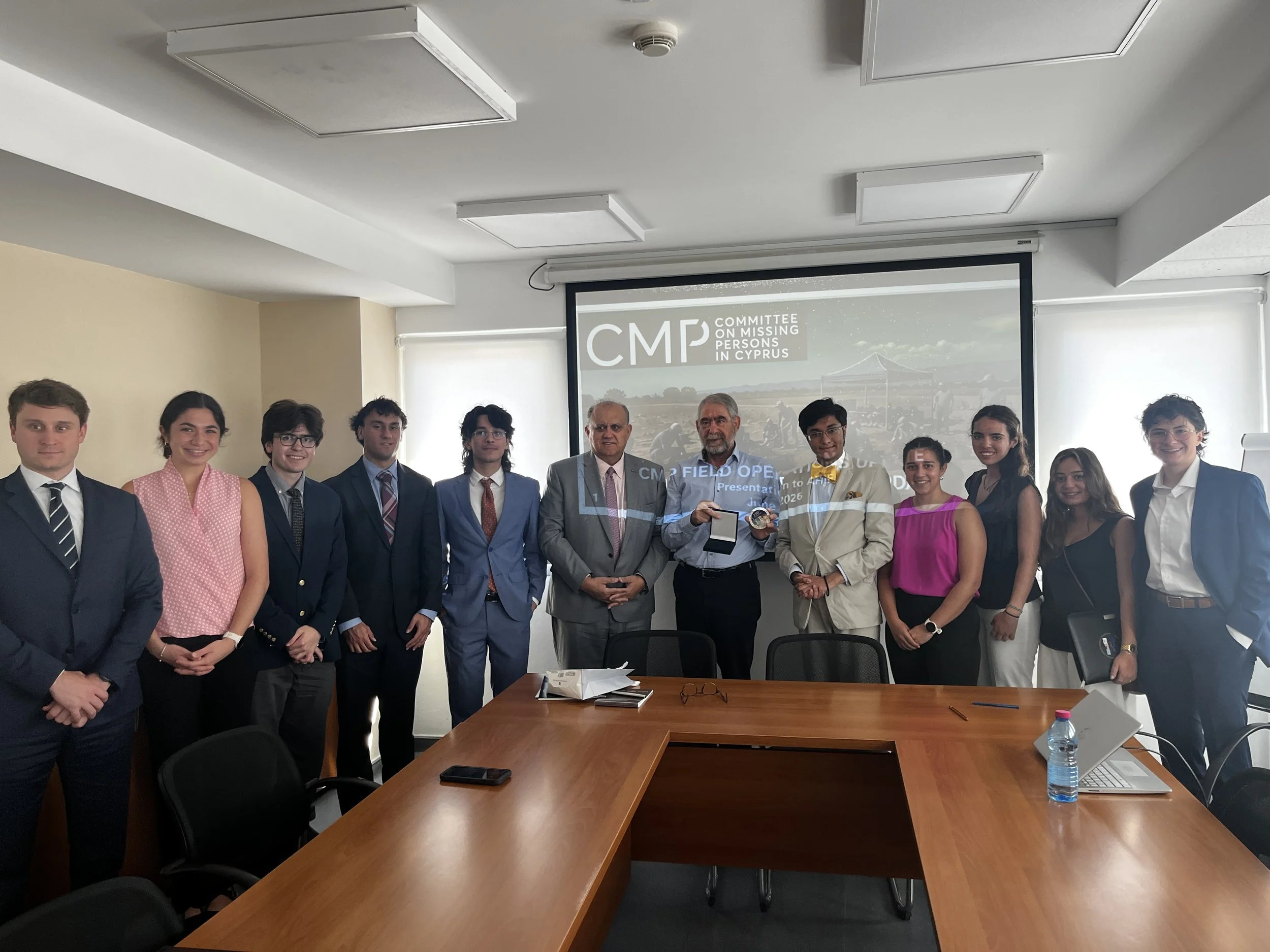
Students later met with Leonidas Pantelides, the Greek Cypriot member of the Committee on Missing Persons in Cyprus. The discussion examined continuing efforts to determine the fate of individuals who disappeared during the intercommunal violence and Turkish invasion, underscoring the unresolved humanitarian consequences of the Cyprus issue.
On June 27, the delegation visited the Turkish-occupied area of Cyprus. Students observed the island’s occupation firsthand and gained a deeper understanding of the continuing effects of occupation on displaced families, communities, cultural heritage and religious sites.
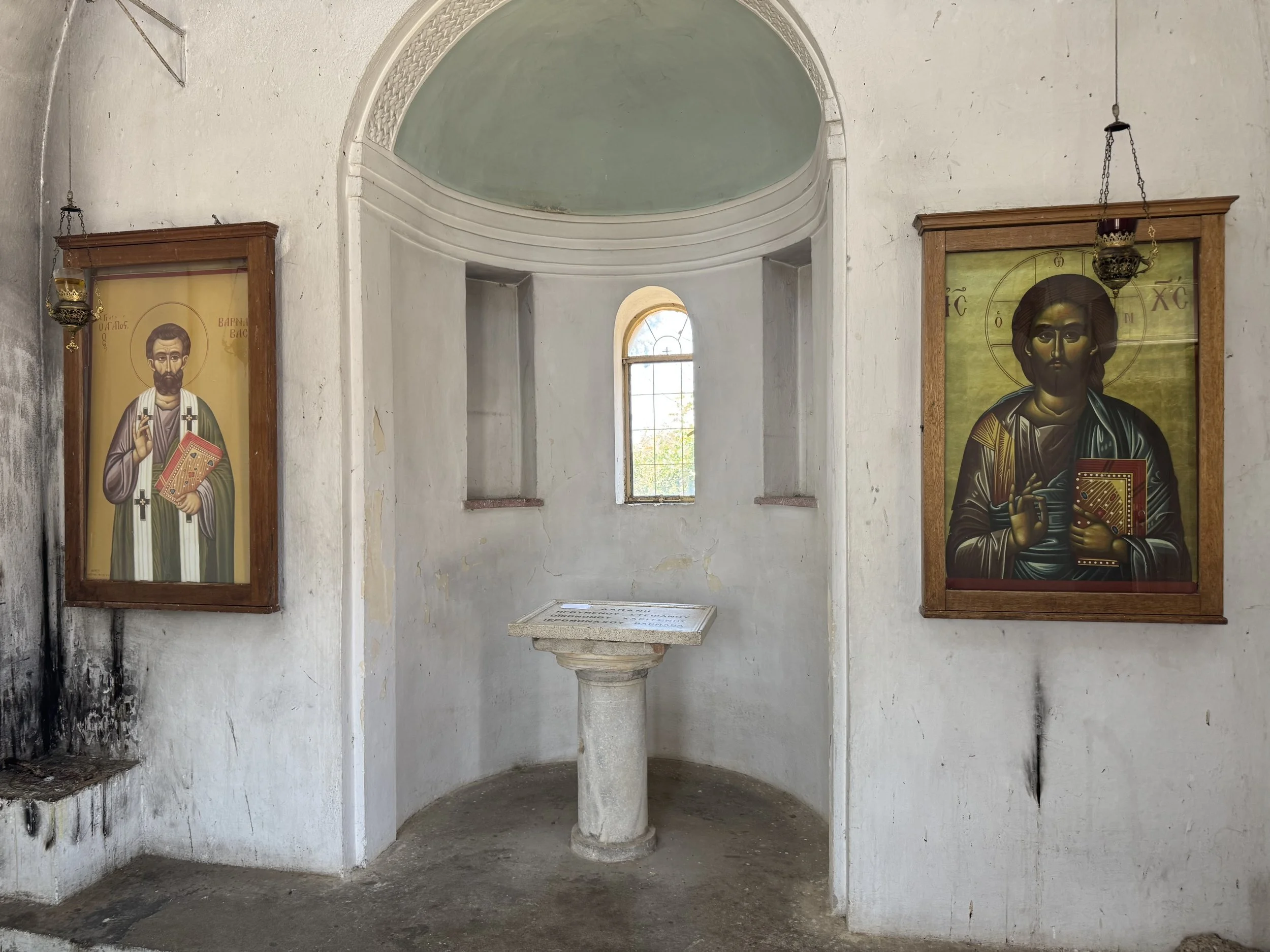
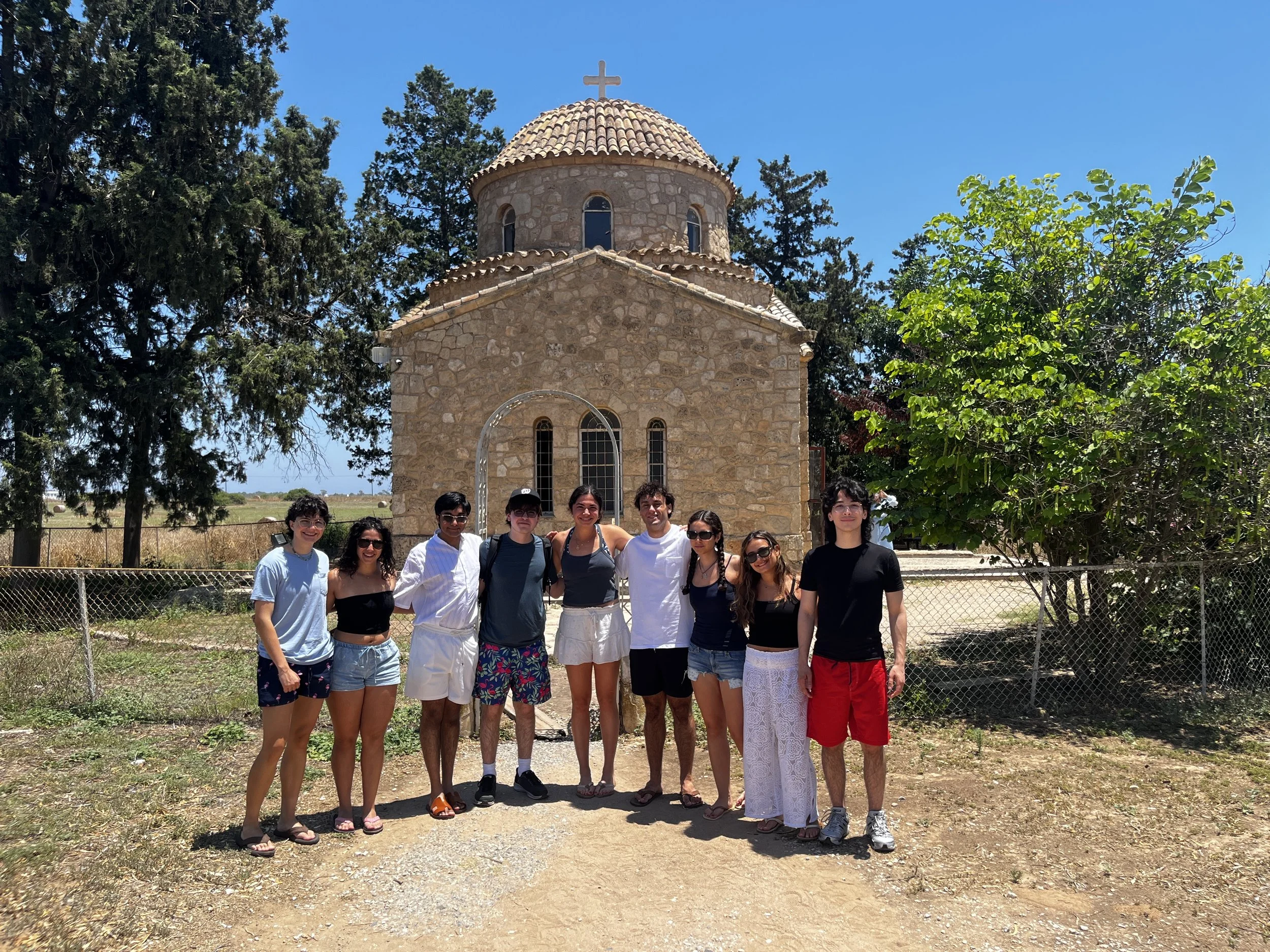
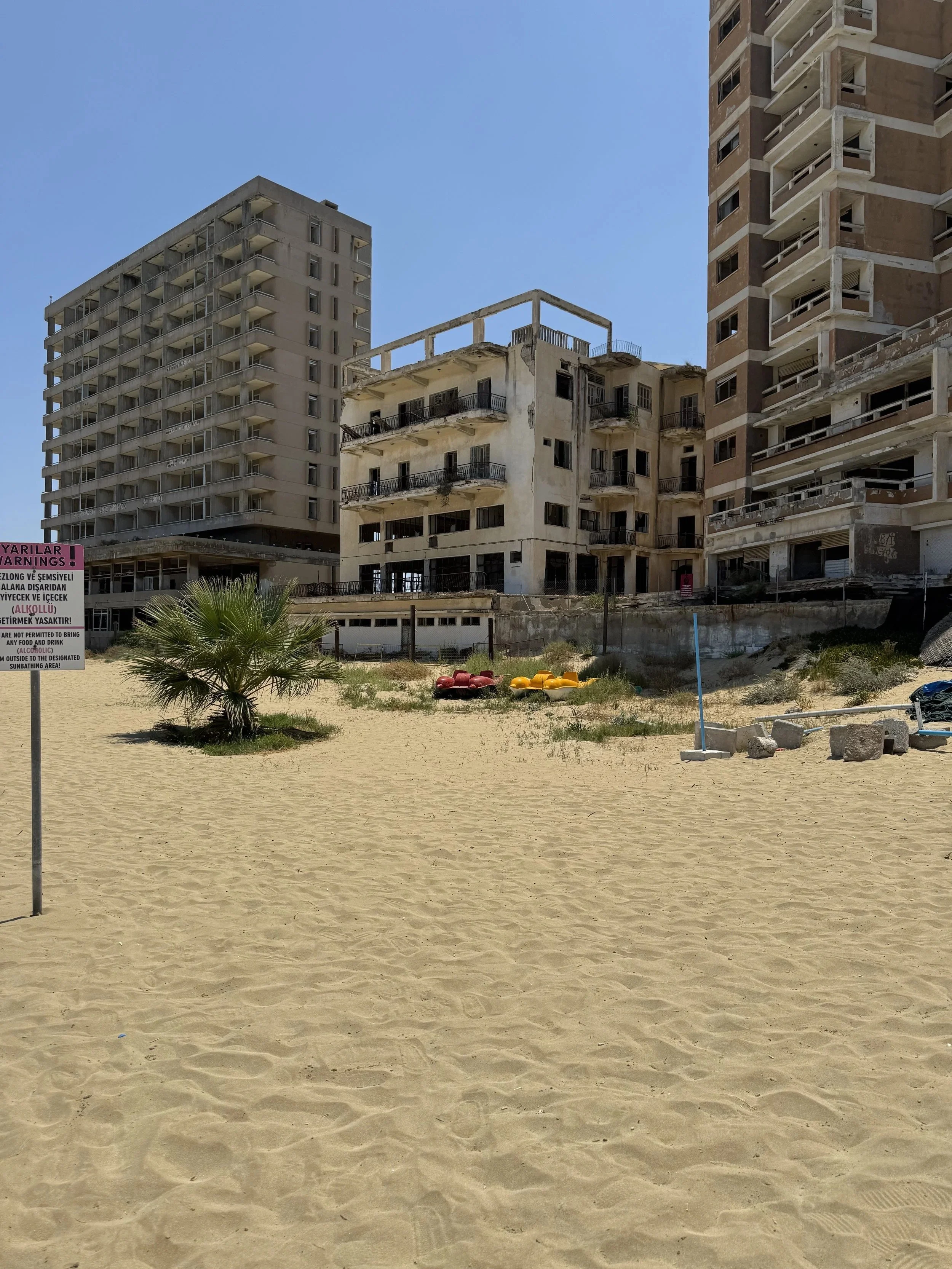
“We also had the opportunity, in Cyprus, to talk to everyday people about their experiences of the occupation,” Spyridon Kass, a junior at the University of Aberdeen, said. “Although most Greek Cypriots rarely, if ever, cross to the occupied area, many feel profoundly connected to it.”
“The opportunity to witness the Turkish-occupied area of Cyprus was instrumental in teaching us the complexities and importance of the Cyprus Question,” Maria Kyriacou, a junior at the University of Virginia, added.
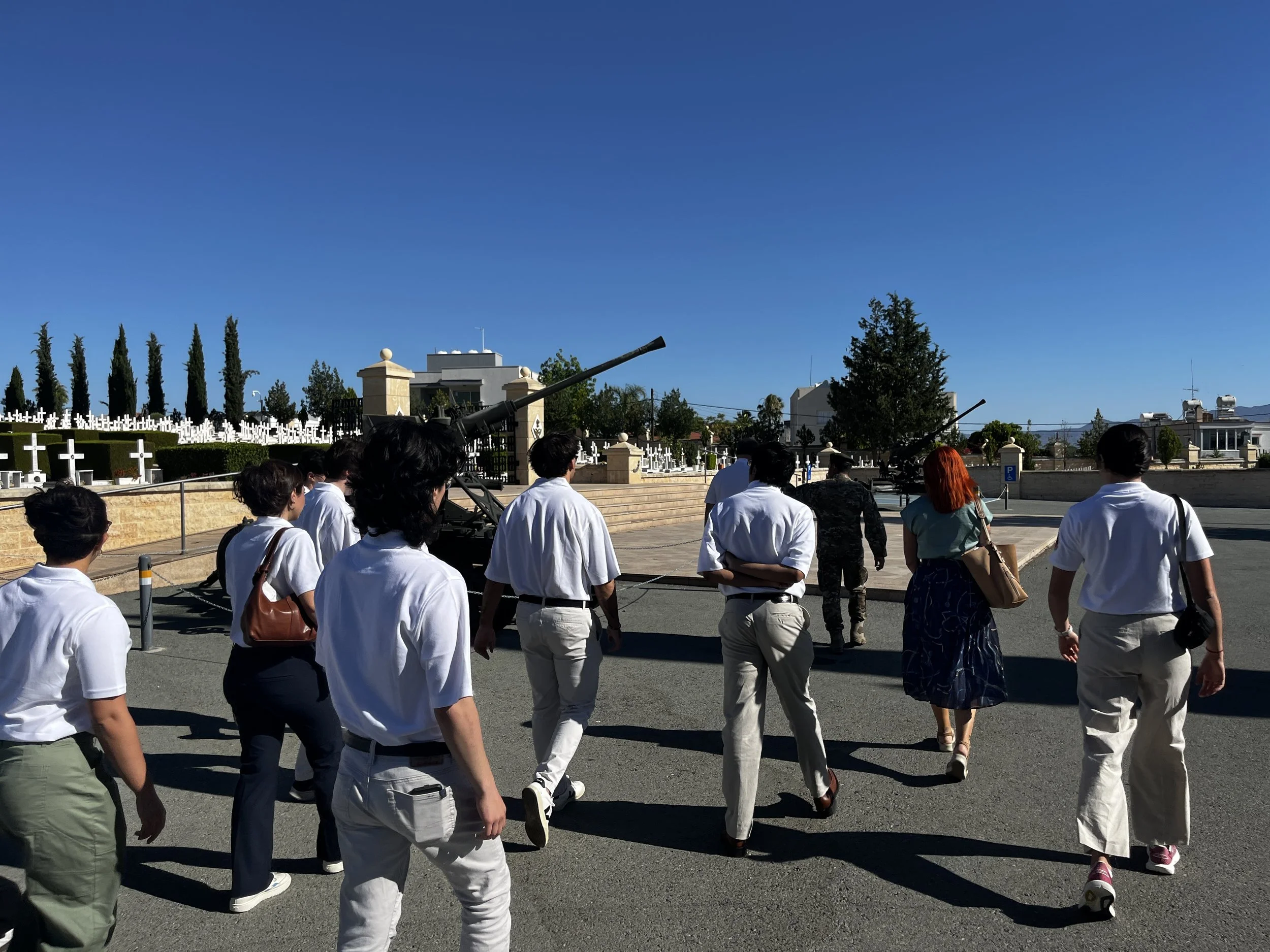
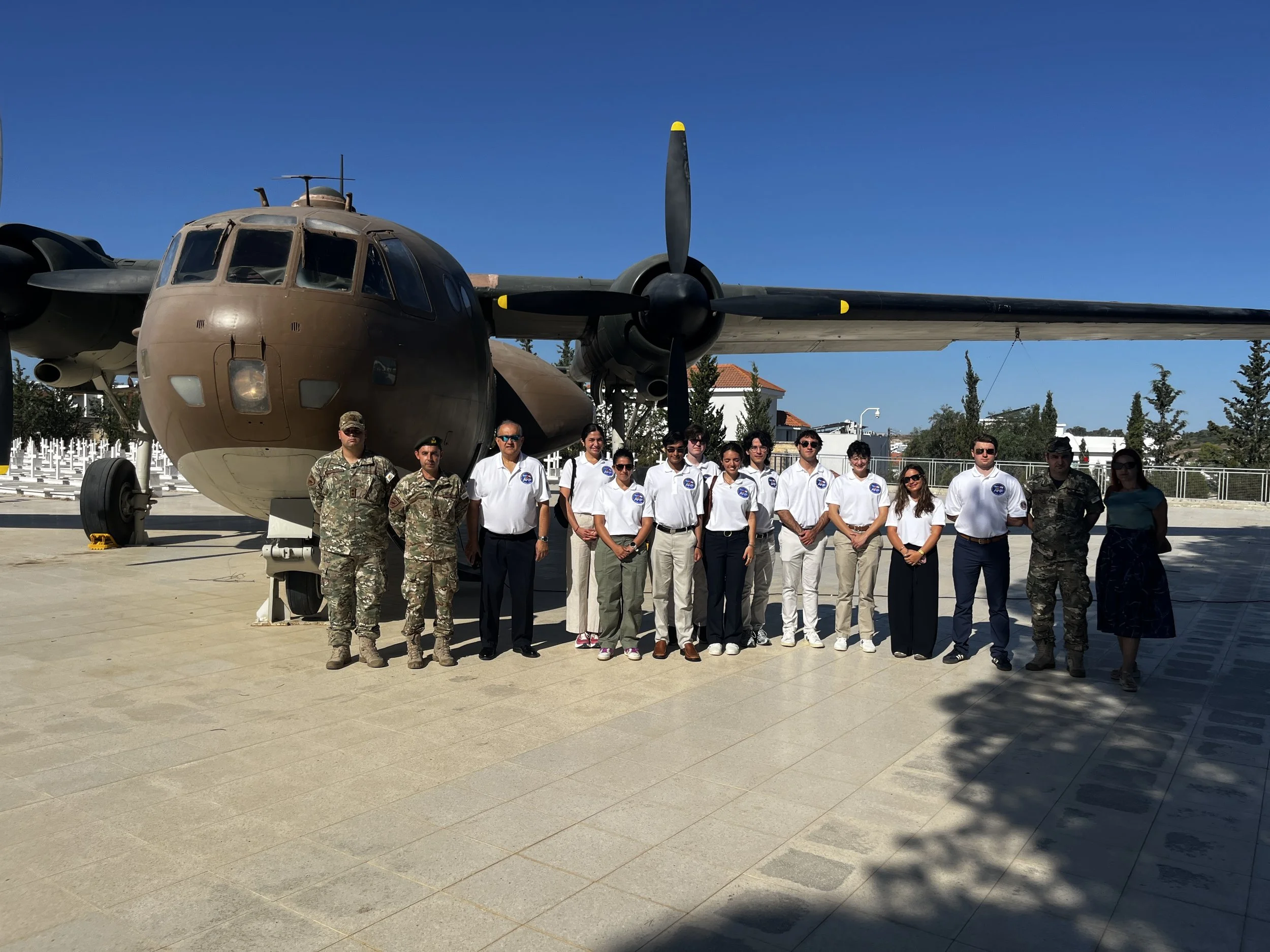
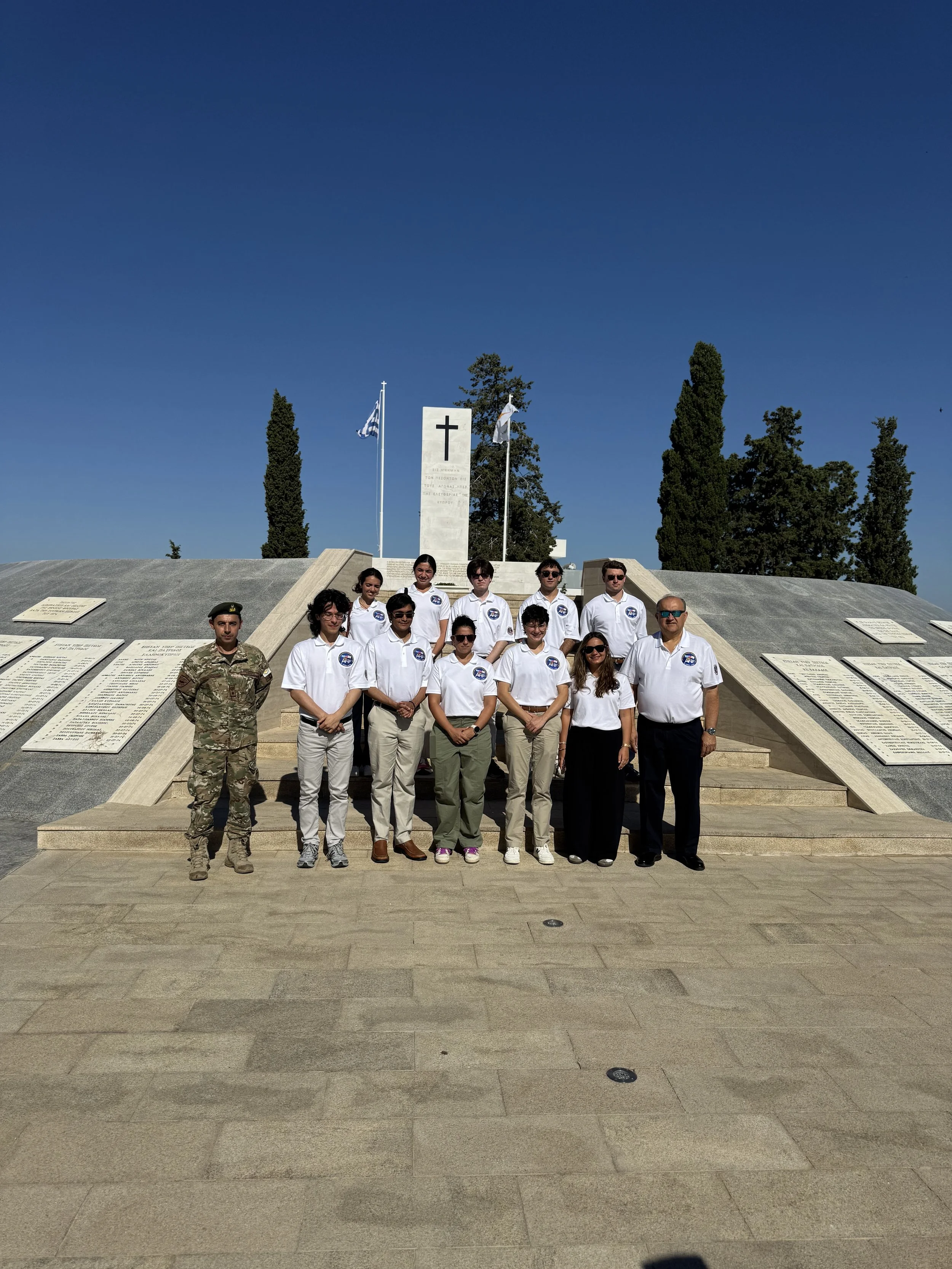
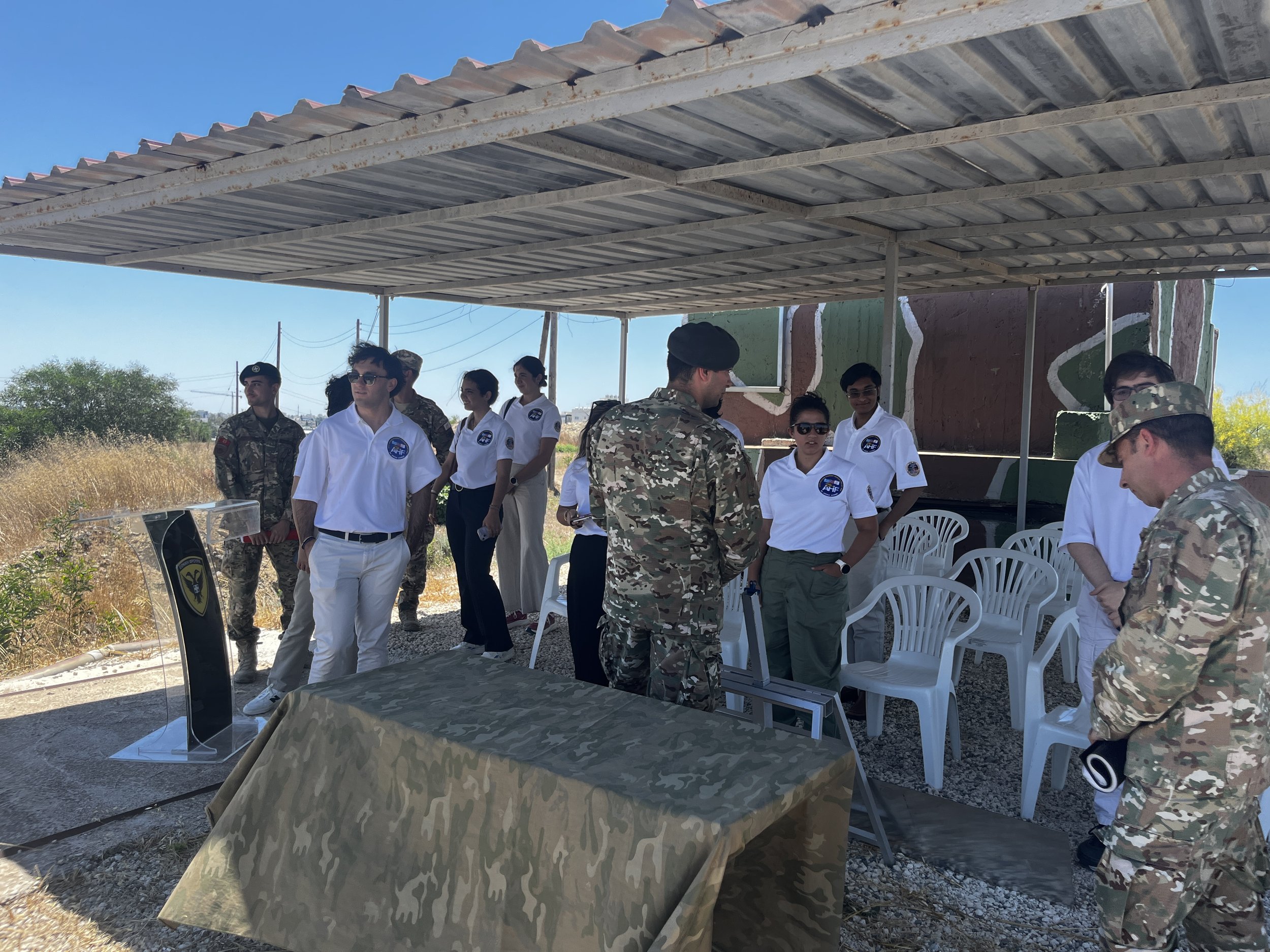
The delegation also visited the Makedonitissa Tomb, where students participated in a moving wreath-laying ceremony honoring those who sacrificed their lives defending the Republic of Cyprus. A subsequent visit and briefing at the Kolokasides Guardhouse further connected students with the island’s modern history and occupation.
Examining Cyprus’ Defense and Regional Security Role
Students received an inside look at Cyprus’ defense institutions, emergency response capabilities and expanding security cooperation with the United States and other regional partners.
The delegation visited the Cyprus Joint Rescue Coordination Center in Larnaca for a briefing on its search-and-rescue mission and role in responding to emergencies in the Eastern Mediterranean. Students also toured the Cyprus Center for Land, Open-seas and Port Security, known as CYCLOPS, which provides training in border, maritime and cybersecurity, among other areas of regional security.
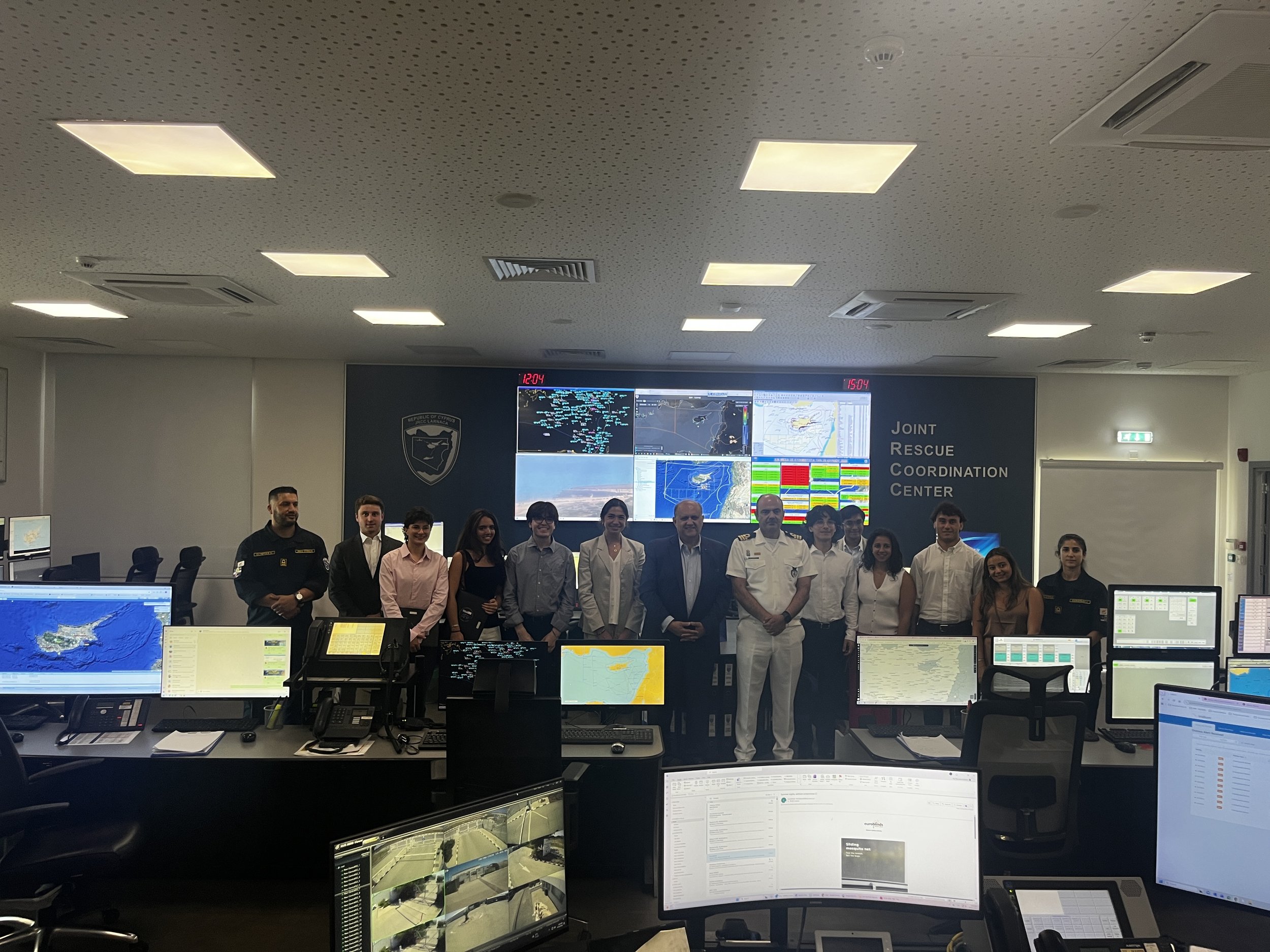
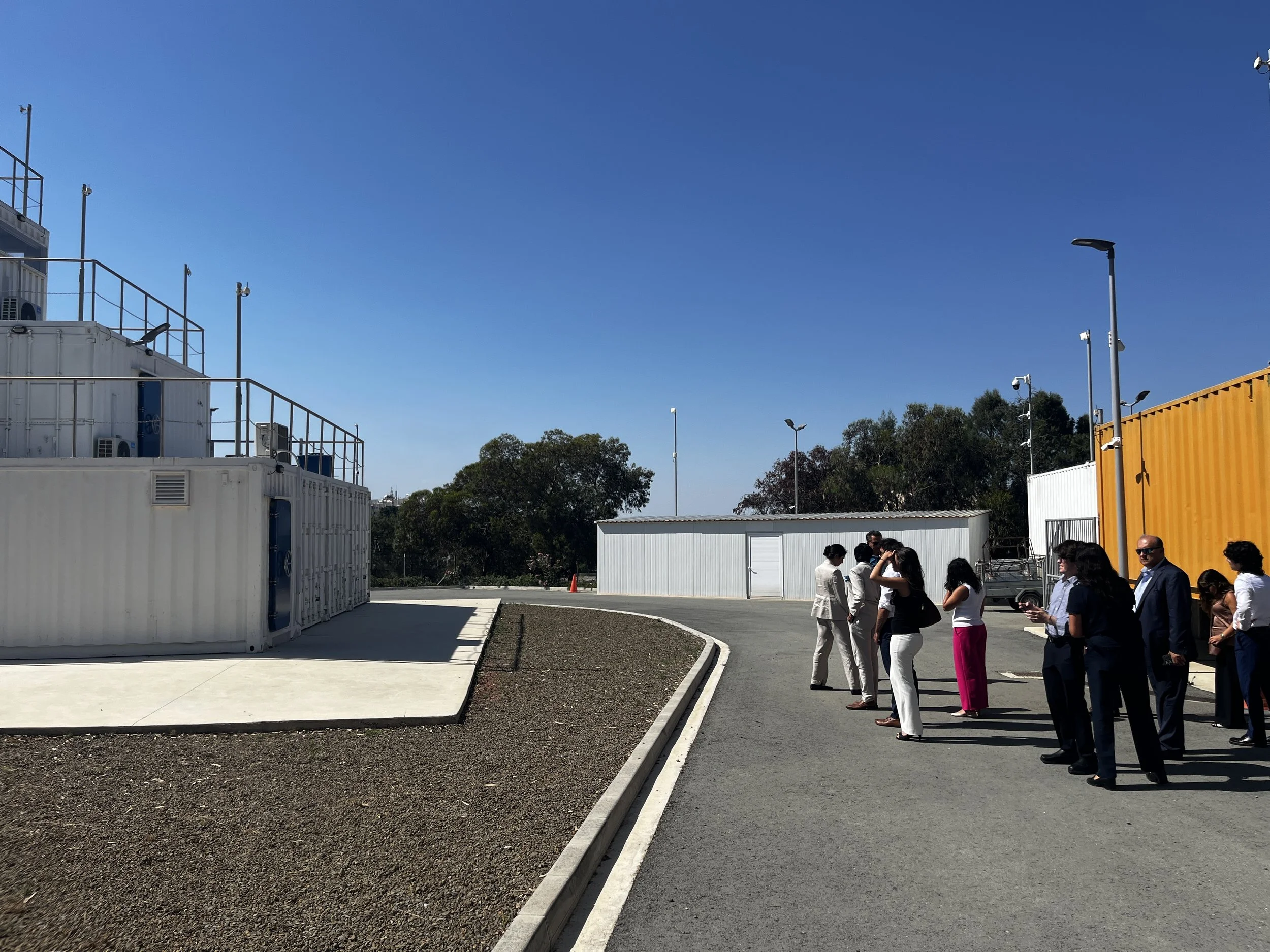
The students later met with Lt. Gen. Emmanuel Theodorou, chief of the Cypriot National Guard. The visit included a National Guard presentation and a luncheon hosted by Lt. Gen. Theodorou at the National Guard Officers’ Club in Nicosia.
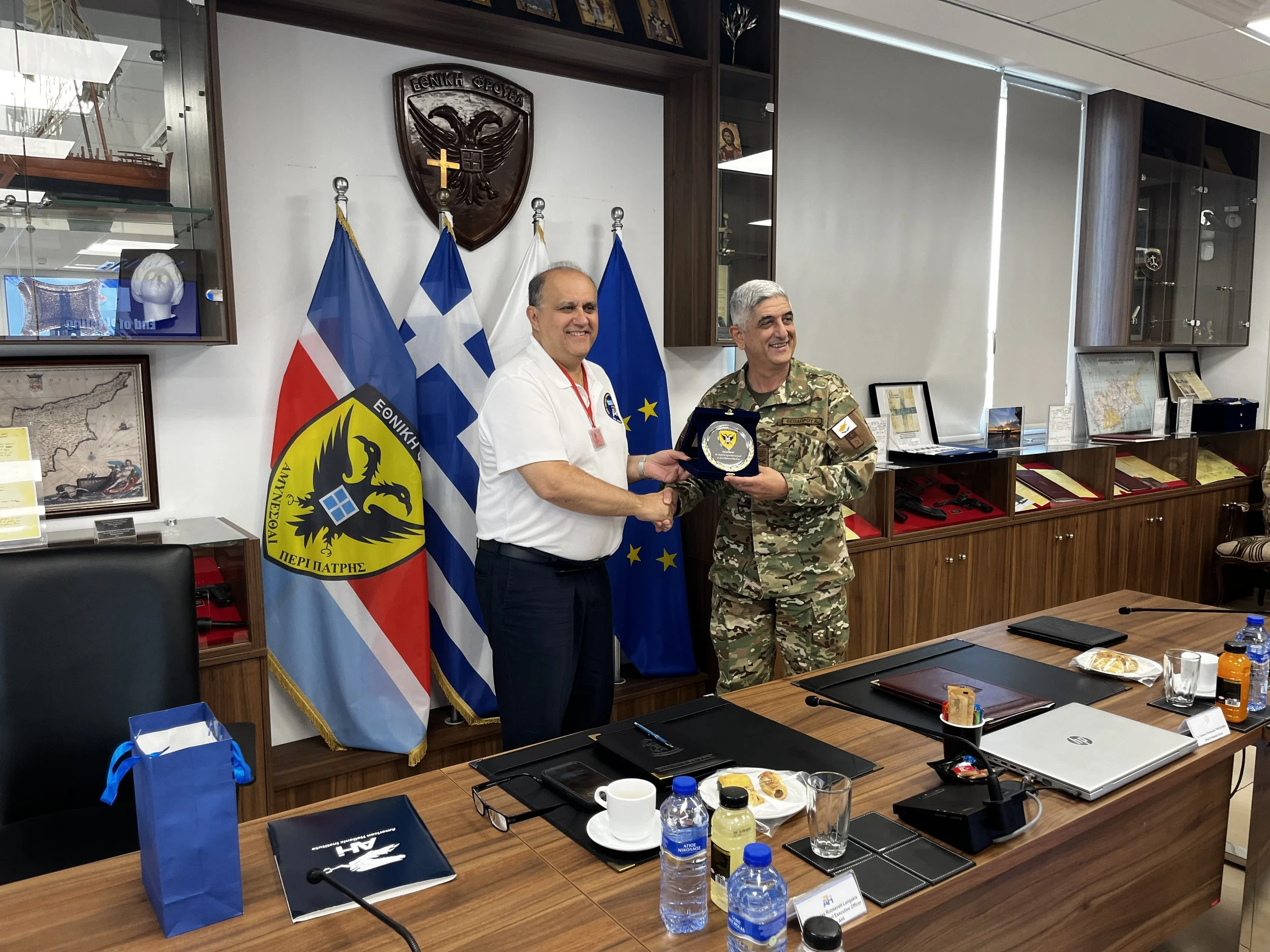
Lt. Gen. Emmanuel Theodorou, Chief of the Cypriot National Guard, with Nick Larigakis during the delegations briefing at the Ministry of Defense.
The defense and security engagements demonstrated how Cyprus is increasing its capacity to respond to regional challenges while deepening its strategic relationship with the United States.
“I gained an appreciation for Greek Cypriots’ continued resilience in the face of illegal occupation, while also learning about how Cyprus and Greece are increasing their regional leverage through military strength, natural resources and economic diversification,” Lukas Koutsoukos, a senior at Yale University, said.
Connecting History, Faith and Cultural Resilience
Religious, historical and cultural experiences complemented the program’s policy and security discussions.
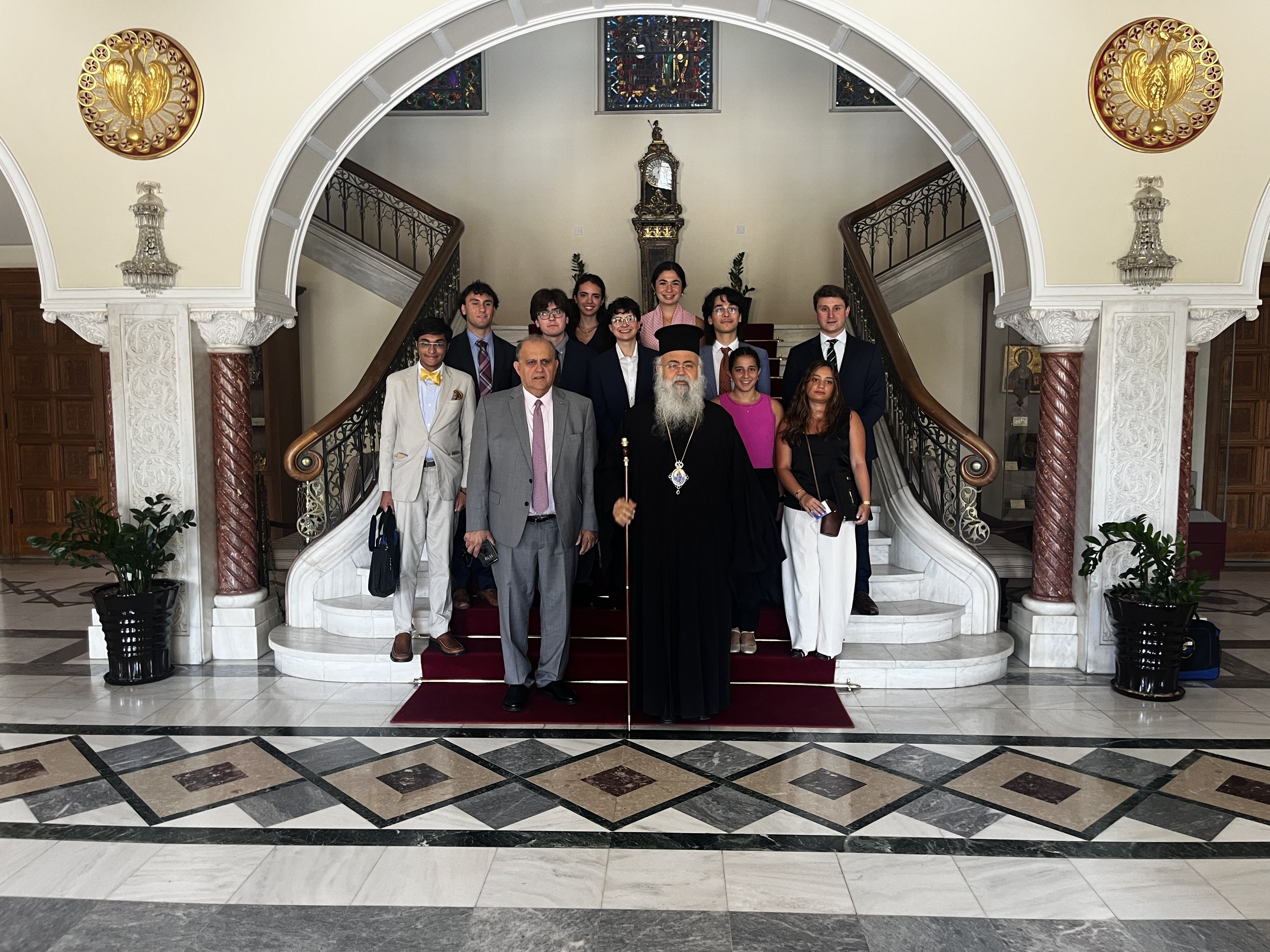
Students met with His Beatitude Archbishop Georgios of Cyprus at the Archdiocese of Cyprus. They also traveled to Kykkos Monastery, one of the island’s most significant religious and cultural sites. The students visited the tomb of Archbishop Makarios III on Throni Hill, and the monastery hosted the delegation for lunch.
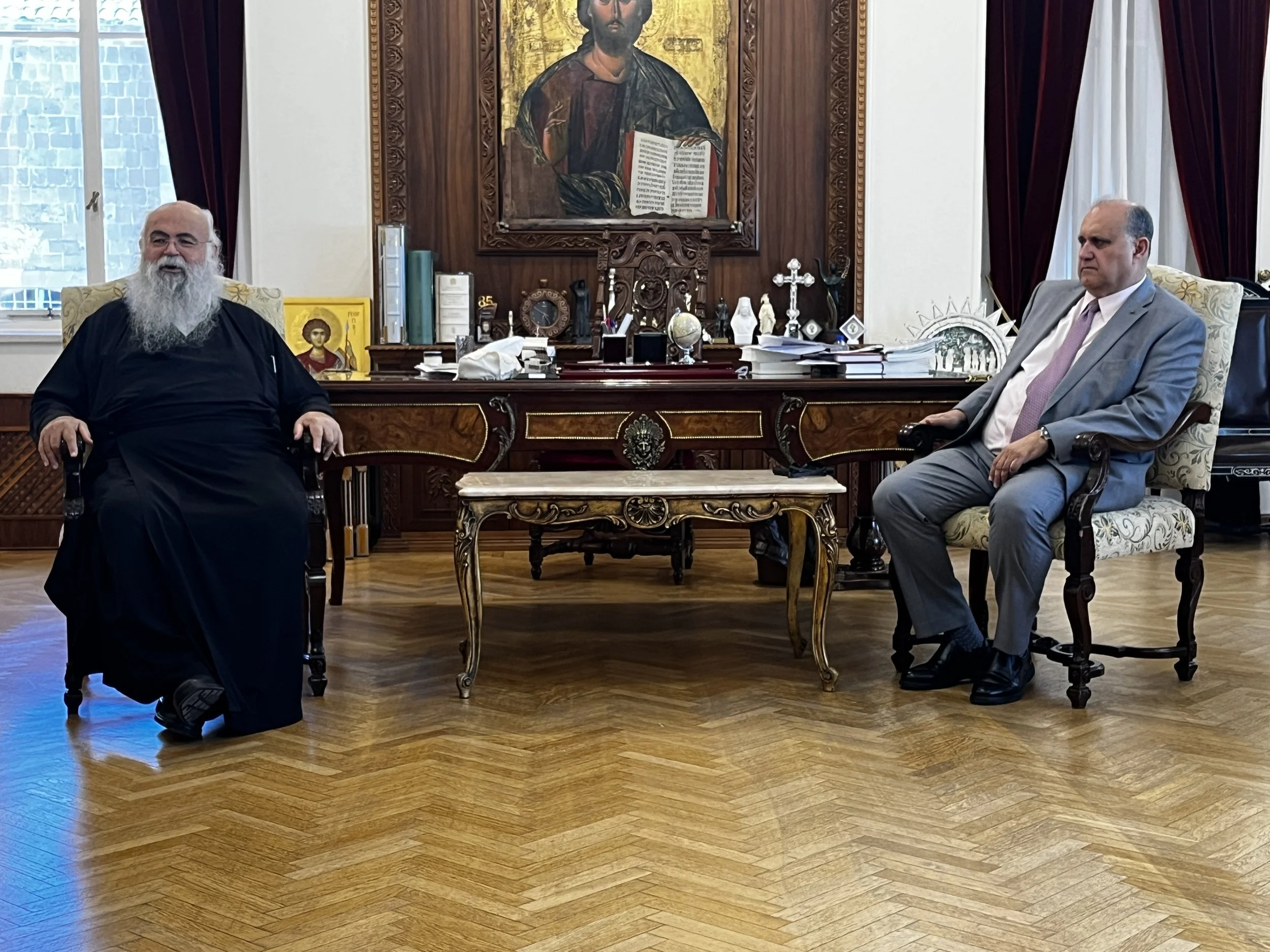
Additional cultural experiences included a tour of the Leventis Gallery, a visit to Larnaca and a dinner hosted by the Service of Overseas and Repatriated Cypriots of the Ministry of Foreign Affairs.
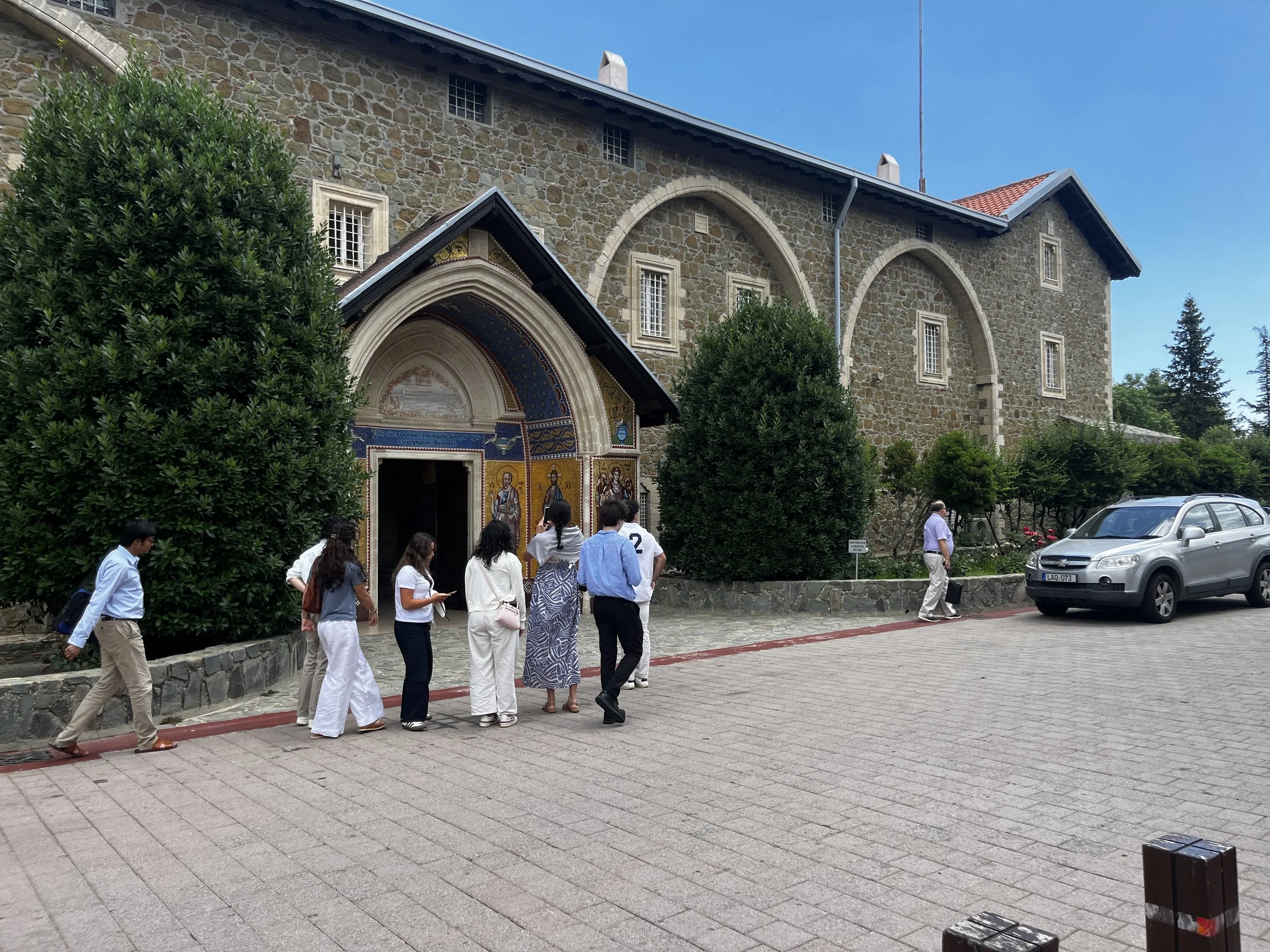
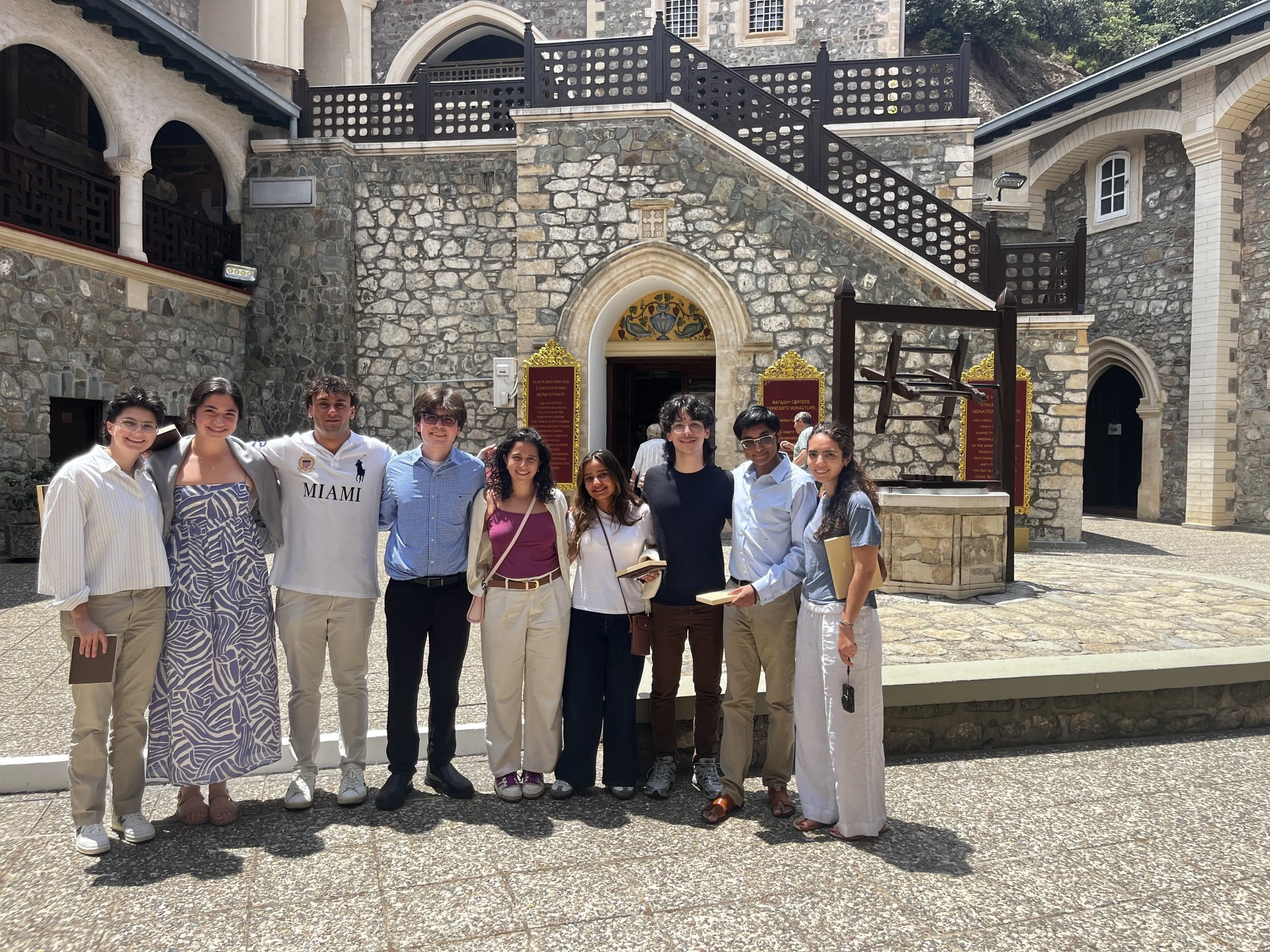
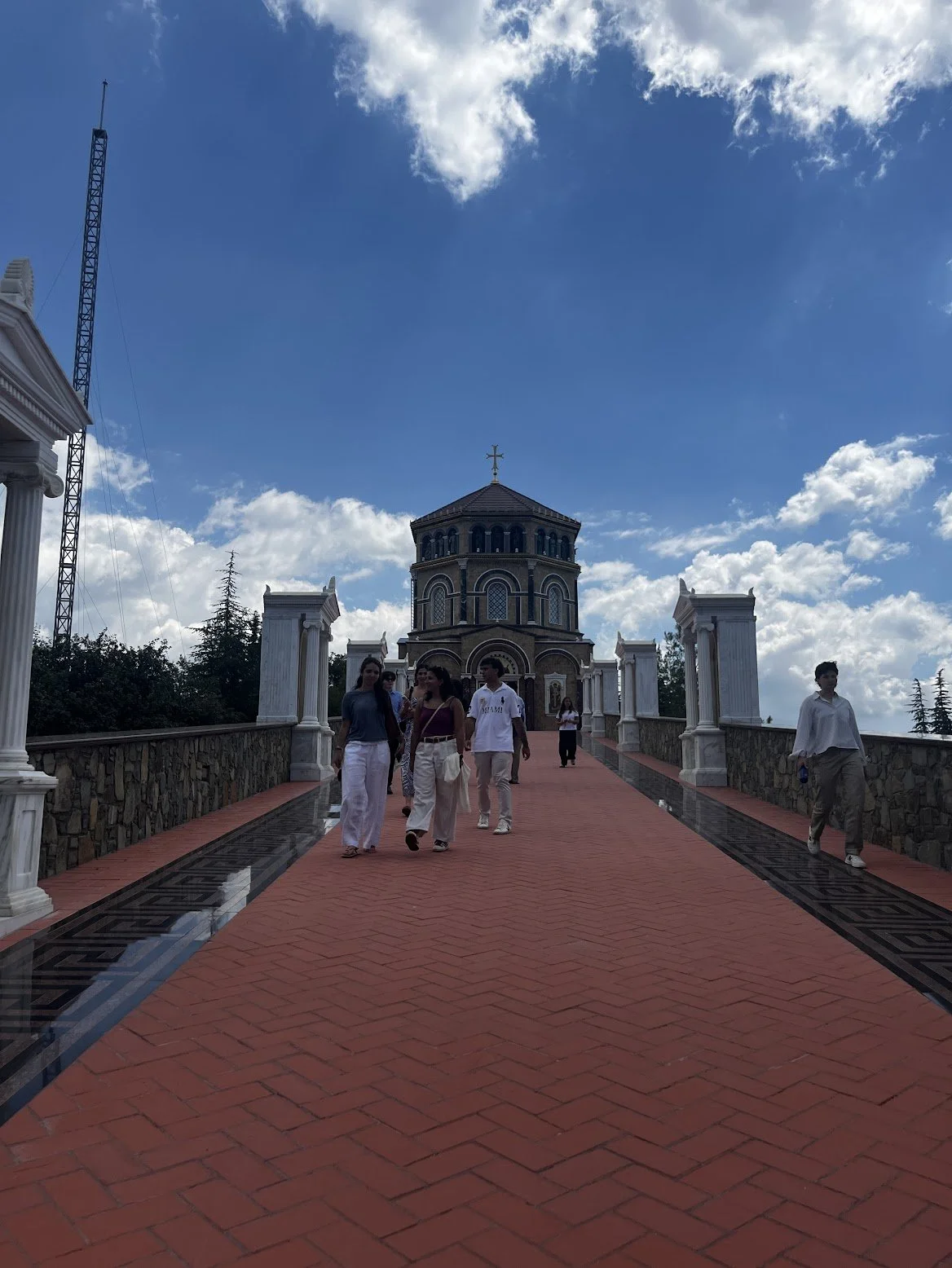
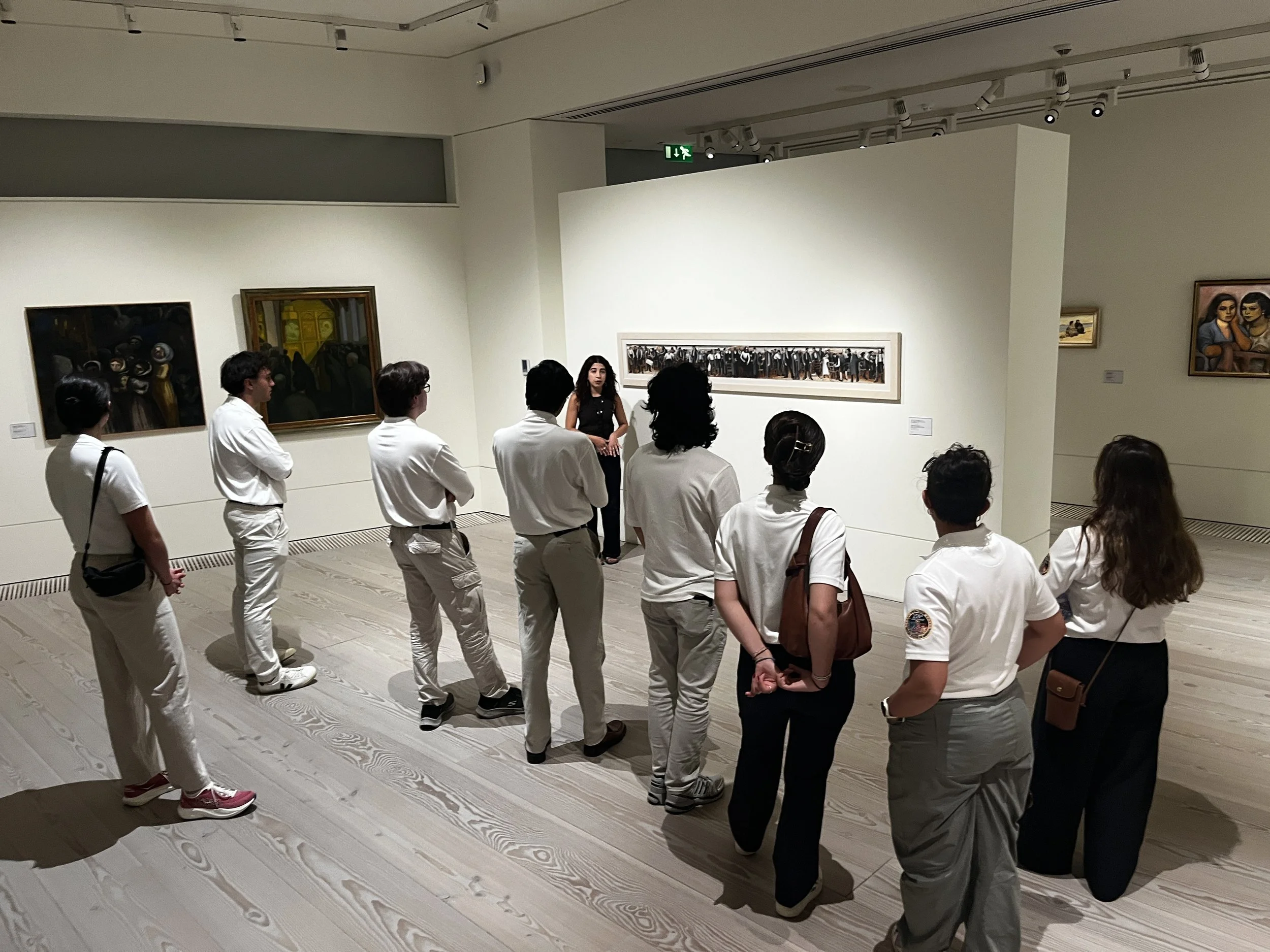
Together, the policy discussions, security briefings and cultural experiences provided students with a comprehensive understanding of Cyprus’ history, resilience and essential role in the Eastern Mediterranean.
About the AHIF College Student Foreign Policy Trip
Now in its 18th year, the AHIF College Student Foreign Policy Trip is a three-week immersive program that offers undergraduate and graduate students a unique opportunity to explore U.S. policy interests in Greece, the Republic of Cyprus and the Eastern Mediterranean. Through direct engagement with government officials and military, diplomatic, religious and civic leaders, participants gain firsthand insight into the region’s political, security, economic and cultural dynamics. The 2026 program began with briefings in Washington, D.C., followed by visits to Cyprus and Greece.